
Consumption habits have changed: customers want fast, easy and hassle-free delivery. For e-tailers, this means offering efficient, flexible delivery alternatives to suit all lifestyles. The e-commerce locker is an essential solution for meeting these new demands, while optimizing logistics costs.
Accessible 24/7, reliable and secure, the intelligent e-commerce locker is no longer reserved for large retailers: it is becoming a concrete growth lever for small and medium-sized businesses.
- What is an e-commerce locker and how does it work?
- Why is the locker the key to your growth and customer satisfaction?
- How can you integrate lockers into your e-commerce logistics strategy?
In this article, you’ll find out what a locker is, why it improves the customer experience, and how to integrate it simply into your omnichannel strategy using tools like Shippingbo.
What is an e-commerce locker and how does it work?
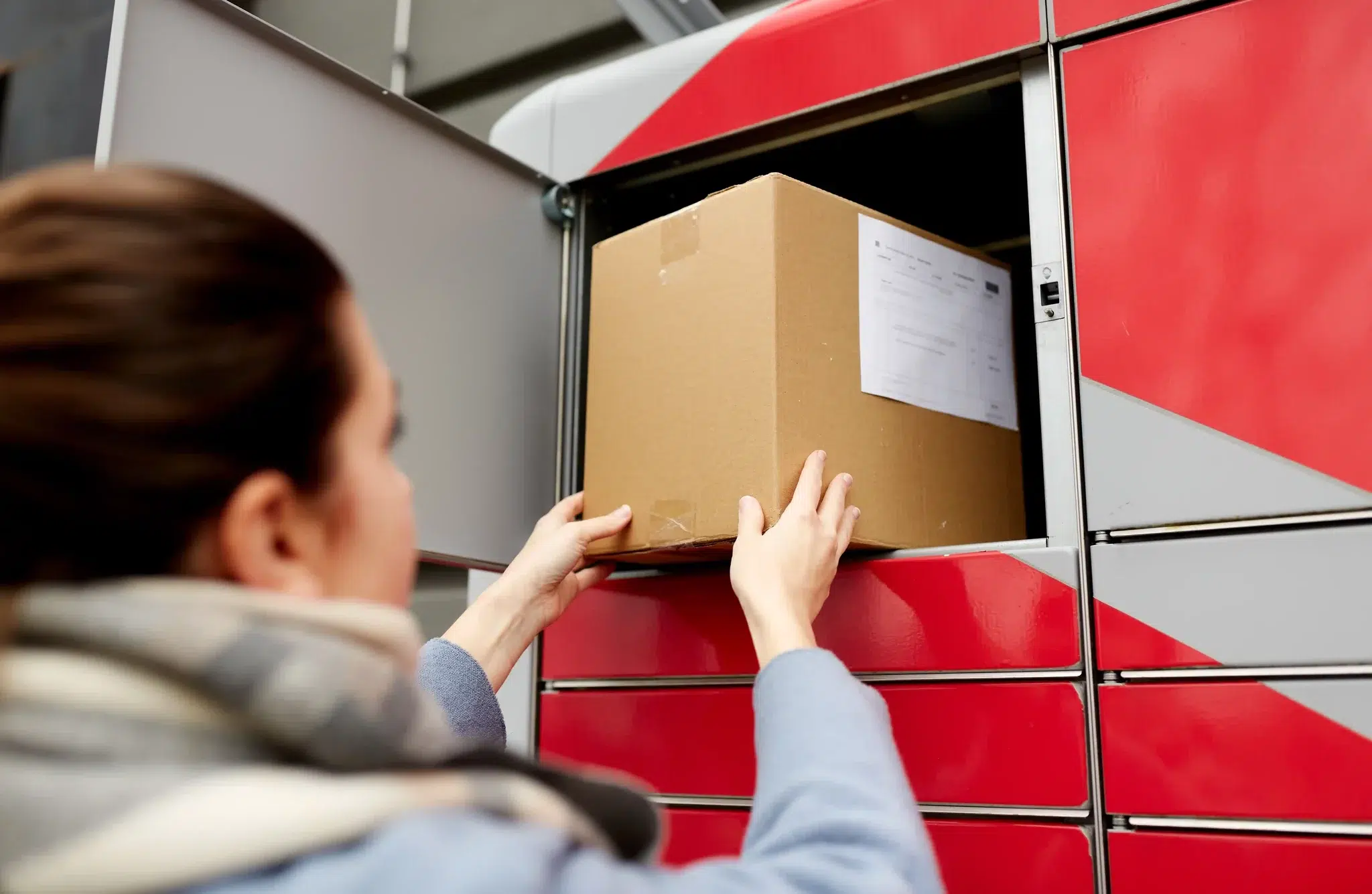
The e-commerce locker is a physical device where customers can collect their parcels independently, 24/7. Installed in strategic locations (train stations, supermarkets, parking lots, shopping centers), these lockers make it easy to pick up online orders without having to go through home delivery or a traditional relay point.
This new delivery method is fully in line with current consumer trends: flexibility, autonomy and speed. Here’s a closer look at how it works, to help you understand why it’s an essential solution.
Intelligent lockers, automatic lockers: a last-mile revolution
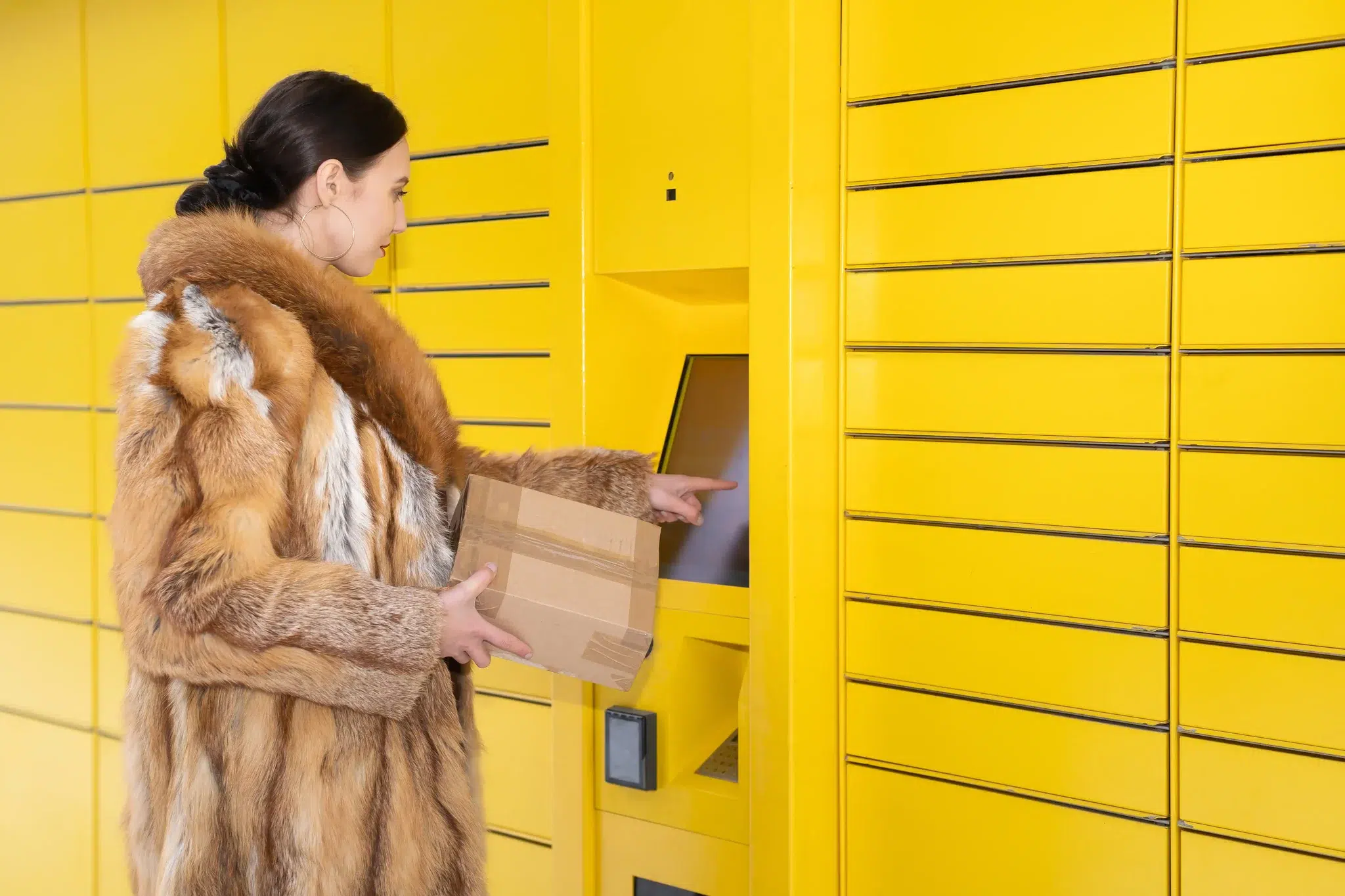
The last mile is often the most costly and complex link in the logistics chain. With an e-commerce smart locker, customers receive a unique code (QR or PIN) by SMS or e-mail, enabling them to access their parcel in an automatic locker. These connected devices enable real-time management of delivery and collection, with no time constraints. It’s a click-and-collect solution that meets the challenges of both speed and flexibility.
A 2024 study shows that the use of automated parcel lockers significantly reduces last-mile costs and lead times.
The key stages of locker withdrawal: from click to locker opening
Here’s how a parcel locker works, step-by-step to help you understand the customer journey:
- Choice of delivery method: When validating their order on the e-commerce site, customers select an automatic collection point from a list of available geolocated lockers. They choose the most convenient location for them: close to home, work or a daily commute.
- Parcel routing: Once the order is ready, the parcel is sent to the chosen secure collection point. Delivery is often grouped with other parcels to optimize routes and limit CO2 emissions.
- Customer notification: As soon as the parcel is deposited in the locker, the customer receives notification by e-mail and/or SMS. This notification contains a unique code (QR code or PIN number), as well as the precise address and availability time of the locker.
- Autonomous withdrawal: Customers can go to the locker whenever they like, at any time of the day or night. They scan the code or enter the PIN on the locker interface, which opens automatically. The operation takes less than a minute and requires no human contact.
Why is the locker the key to your growth and customer satisfaction?
Beyond its practicality, the e-commerce locker offers real benefits for e-tailers. It simplifies deliveries, reduces delivery failures and improves the overall customer experience. Here’s how.
Improving the customer experience and securing delivery
Offering delivery via locker reduces delivery failures and returns. Customers take charge of their delivery, choosing when to collect their parcel. There’s no need to be at home or chasing after a delivery notice. The customer pick-up service is smooth, safe and adapted to modern lifestyles.
It avoids queues, restricted opening hours or redeliveries, which are often a source of frustration for buyers. This quality of service also plays a key role in building customer loyalty by reinforcing confidence in your delivery times and methods.
Improve logistics efficiency and cut costs
For e-tailers, the locker is a real money-saving opportunity. By optimizing e-commerce logisticslogistics, they avoid long, uncertain delivery rounds, often synonymous with delays and additional costs. Theautomation of fixed-pointdeliveries means that several parcels can be grouped together in a single locker, reducing the cost per order.
This pooling of flows also enables us to better control volumes and avoid unnecessary round trips. It’s a real improvement in logistics management, combining profitability, simplicity and sustainable performance.
This approach also offers excellent scalabilityideal for e-tailers who want to absorb more orders without burdening their logistics structure.
The positive impact on omnichannel and Ship From Store
A well-integrated e-commerce locker multiplies the points of contact between brand and customer. By linking the physical store to digital, the ship from store becomes possible. In-store stock is used to ship by locker, reducing lead times and costs while leveraging existing infrastructure. This transforms each store into a logistics mini-hub, relieving congestion in central warehouses and streamlining operations.
Integrating lockers into your logistics network also contributes to your CSR commitments: researchers have shown that they reduce carbon footprints by consolidating deliveries in a single location, avoiding individual journeys.
The result is improved responsiveness to demand, reduced dormant stocks and more resilient logistics. A truly omnichannel solution for efficiency and customer satisfaction.
How can you integrate lockers into your e-commerce logistics strategy?
Integrating lockers into your logistics system requires both strategic and technical thinking. Choice of supplier, software connections and flow automation are the cornerstones of effective implementation.
Choosing the right partner: criteria and comparison
Installing a locker is more than just installing a box: it’s a genuine logistics project that must be aligned with your business objectives, your flows and your technical constraints.
| Criteria | What to check |
| Price | Cost per package or per opening, or monthly subscription. Don’t forget installation, maintenance and technical integration costs. |
| Capacity & territorial coverage | Size and volume of available lockers. Network density in your catchment areas. Adapted to your products (bulky, fragile, etc.). |
| Technical compatibility | API or native integration with your e-commerce solution (CMS, OMS, WMS). Ensures smooth, automated operation. |
| Maintenance & support | Reactive support, real-time monitoring, assistance in the event of errors or blockages. Clear commitments on response times. |
The best locker is therefore the one that fits perfectly with your business, your volume, your customer target and your information system. Don’t stop at price alone: choose a reliable, scalable and well-integrated solution to guarantee your customers the best possible experience.
Technical integration: the crucial role of OMS, WMS and TMS Shippingbo
A locker is only fully effective if it is integrated with your logistics tools. To automate flows and avoid friction, you need to connect your system to an OMS, WMS and TMS.
This architecture saves time, makes operations more reliable and optimizes the profitability of your locker deliveries, without complicating your existing processes. All with centralized management and no manual errors.
With Shippingbo, this integration is seamless and centralized, thanks to an all-in-one software suite:
- OMS centralizes all your multi-channel orders and synchronizes stocks in real time, for perfect visibility of product availability.
- At the same time, the WMS efficiently controls order preparation and automates logistics flows, avoiding human error.
- Finally, the TMS automatically selects the most suitable carrier, prints the transport labels, then sends the tracking numbers to customers.
You can integrate the locker into your strategy without complicating your processes. Shippingbo also supports a wide range of compatible solutions: multi-stop modules such as AtlasPickUpdedicated to Shopify, or Octolize and Hubbox.
On the carrier side, you benefit from native integrations with Mondial Relay, InPost, Colissimo, Chronopost 2shop, DPD or even GLS.
Shippingbo is also ready for new players such as VintedGo or Amazon Lockerto keep pace with rapidly evolving uses.
The result: considerable time savings, improved productivity and optimized profitability . With Shippingbo, you can integrate locker withdrawal into your overall strategy without complicating your internal operations.
Adopt lockers to boost your logistics and satisfy your customers
Delivery via e-commerce locker is more than just a trend: it’s an effective response to the expectations of modern consumers. Fewer returns, greater satisfaction, streamlined logistics and simplified omnichannel access.
For e-tailers, adopting lockers means choosing a flexible, cost-effective delivery solution in line with new consumer habits. It’s also an opportunity to make better use of stock, automate logistics flows, and offer a seamless shopping experience, from order to collection. Thanks to a well-thought-out installation and high-performance logistics software, connected lockers become a competitive lever, even for small structures.
With Shippingbo, you centralize all your operations and automate the management of your deliveries, including lockers. Whether you sell via your own website, on a marketplace or in a physical store, the solution adapts to your organization to help you improve performance, productivity and peace of mind.
Would you like to go further in optimizing your deliveries and integrate solutions like lockers into your e-commerce strategy? Discover our webinar “Accelerate your growth with fast, reliable delivery” and take action today:

FAQ: everything you need to know about e-commerce lockers
It’s a secure, connected locker that allows customers to collect their parcels 24/7, often using a unique code. This last-mile solution is highly appreciated for its flexibility.
Lockers reduce home delivery failures, which in turn reduces reshipment costs and after-sales service. Integrated with your OMS/WMS, they centralize this order flow, automate labeling and offer a smooth pick-up experience, essential to a successful omnichannel strategy.
Consider 24/7 accessibility, level of security (video surveillance, alarm), ease of integration with your logistics software (OMS/TMS), network coverage (customer proximity) and available rack size options.
Glossary
Locker e-commerce
Connected locker allowing customers to pick up their orders in a self-service environment.
Automatic parcel collection point
A locker or locker-type retrieval point, accessible without human interaction.
Intelligent e-commerce locker
Connected, secure version of a conventional locker, managed in real time.
Omnichannel parcel collection solution
Delivery option integrated into an omnichannel strategy, linking web, mobile and physical channels.
OMS (Order Management System)
A tool that centralizes and manages orders from different sales channels.
WMS (Warehouse Management System)
Warehouse management software to control inventories, preparations and shipments.
TMS (Transport Management System)
Software solution to optimize carrier and delivery management.
Ship from Store
Shipment of an online order directly from a physical store, rather than from a central warehouse.
Last mile e-commerce
Final delivery phase, from warehouse or relay point to end customer.
Scalability
Ability to absorb a growing volume of activity without loss of performance or organizational overload.
Loyalty
All actions designed to encourage a customer to make repeat purchases.