

Many entrepreneurs have questions about the measures they need to put in place to safeguard their business and their staff. We’d like to take a look at some of these issues, to help you make the right decisions for your e-commerce logistics.

We need to “intensify” teleworking, stressed the French President in his speech on March 12. The Labor Code provides for the threat of epidemics. Article L.1222-11 of the French Labor Code stipulates that “in exceptional circumstances, notably the threat of an epidemic, or in cases of force majeure, the implementation of teleworking may be considered as an adaptation of the workstation made necessary to ensure the continuity of the company’s activity and the protection of employees”. This text – which reproduces the provisions of the 2009 ministerial circulars on the H1N1 flu pandemic – is transposable to what is currently happening with the Coronavirus (COVID-19).
As telecommuting is an adaptation of the workstation, it may therefore be compulsory for the employee in these circumstances, enabling the employer to unilaterally adapt the employment relationship. With this provision, the legislator neutralizes the employee’s right to refuse telecommuting.
“An employee cannot decide on his or her own initiative to work remotely,” said Guillaume Roland, an employment lawyer associated with the Herald law firm, when interviewed by L’Usine Nouvelle. “You need your employer’s agreement”, he added.
For parents of children under 16, who cannot telework, they are automatically entitled to sick leave. Muriel Pénicault, Minister of Labor, clarified this on France Info. “It’s a sick leave without them being sick, it’s without going to the doctor, there’s no waiting period, it’s from the first day that you’re covered, and it’s the employer who declares it,” she explained. “The employer can’t say no, it’s automatic, if you have a child under the age of 16 who is in nursery or school.and work is not possible, you are automatically entitled to it”.
Coronavirus (Covid-19) and e-commerce logistics: warehouse work

On the other hand, a large number of professions do not allow telecommuting. This is the case in the transport and logistics sectors. In such cases, it is up to the employer to take all necessary measures to maintain the activity in compliance with current health regulations, and to provide each employee with the required proof of business travel.
Protests are beginning to mount in the warehouses of non-essential activities. The warehouses of La Redoute and Amazon in the Hauts de France region are experiencing unrest, as employees wish to exercise their right of withdrawal.
What does the law say about the right of withdrawal? Articles L.4131-1 to L.4131-4 of the French Labor Code explain that the right of withdrawal can only be exercised if the worker has reasonable cause, which exists: if the worker, in the context of his work, has reason to believe that he is facing a serious and imminent danger to his life or health.
To avoid any social conflict, you need to apply the preventive measures provided for: avoid bringing people together, communicate the precautions to be taken, disinfect workstations and tools used by several people. A climate of trust needs to be established between the company and its employees, so that all anxieties can be resolved and discussed in an atmosphere of mutual understanding.
Maintaining the e-commerce supply chain through work reorganization
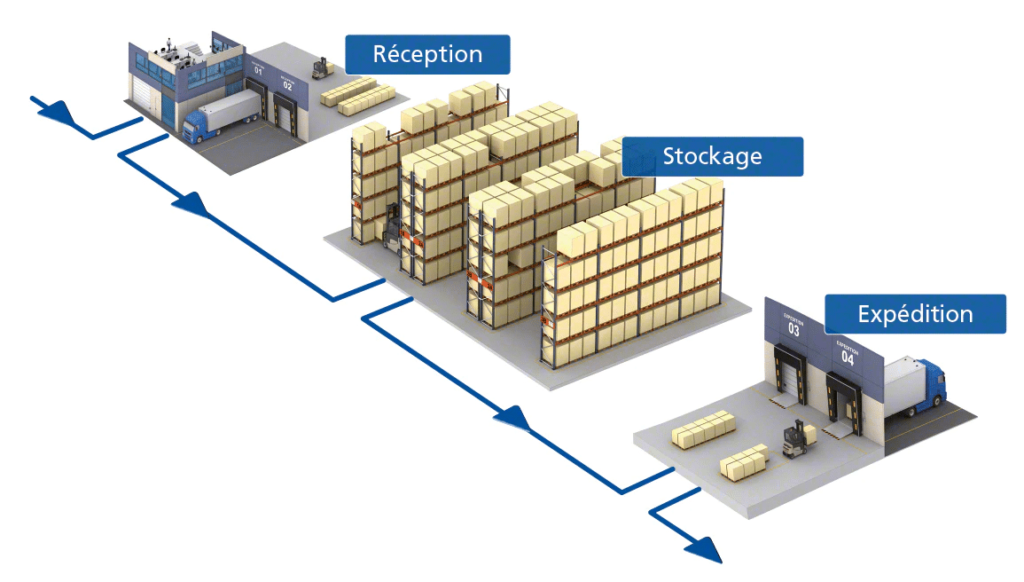
The implementation of these measures sometimes requires adjustments to work organization, such as working hours. In exceptional circumstances, and in times of crisis, working hours may be modified by the employer or with the authorization of the labor inspectorate. There are a number of ways in which the Labor Code can be made more flexible:
- Suspension of the 35-hour weekly rest period (24-hour weekly rest plus 11 consecutive hours of daily rest);
- Derogation from the daily rest period of 11 consecutive hours ;
- Exceeding the maximum daily working time of 10 hours ;
- Exemption from the maximum daily working hours for night workers ;
- Use of overtime without counting against the annual quota ;
- Use of standby duty: in exceptional circumstances, one clear day’s notice.
It will also be possible to request administrative authorization for the following measures:
- Derogation from the maximum daily working hours in the event of a temporary increase in activity;
- Derogation from the 8-hour maximum daily working time for night workers in the event of circumstances beyond the employer’s control, abnormal and unforeseeable events, or exceptional occurrences whose consequences could not have been avoided;
- Derogation from the maximum average weekly working time (46 hours) or the absolute 48-hour limit (up to a maximum of 60 hours).
To avoid too many people working at the same time, we can also imagine a 2/8 or 3/8 organization of work and modify staff schedules or spread the days worked over the seven days of the week.
Labor Minister Muriel Pénicaud and Economy Minister Bruno Le Maire have announced that Sunday working will now be authorized for logistics companies, while night work rules will be relaxed.
In response to the health crisis caused by the Coronavirus (Covid-19), measures have been taken to enable logistics companies, which are essential in this exceptional context, to maintain supplies to stores, particularly food stores. ” I received a request from logistics companies, and on Friday evening I issued an order authorizing Sunday working ” for all food logistics, said Muriel Pénicaud, Minister of Labor, on LCI on Sunday.
It is conceivable that these measures could be extended to all companies in the coming weeks. To enable the necessary adaptations to be made, the labor administration will probably be asked to be flexible and responsive to company requests.
Lending manpower between companies can also be envisaged to cope with a downturn in economic activity. The French Labor Code authorizes the lending of labor on a not-for-profit basis (art. L.8241-1 of the Labor Code).
As long as the lending company simply invoices the user company for the cost of salaries and charges relating to the employees made available, the lending of labor for consideration, on a not-for-profit basis, for a limited period of time and without prejudice to the employee or infringement of labor law, is authorized.
Implementing these measures also requires adjustments to workstations, such as spacing workstations further apart (e.g. packing stations), using gloves and personal protective masks, and cleaning workstations and tools (computers, pallet pullers, PDAs, etc.) at the end of shifts. We can also imagine spacing out the time between two shifts to allow the workplace to be disinfected. Don’t forget that viruses have a variable lifespan:
- 5 minutes on the skin;
- a few hours in dried secretions;
- 8 to 12 hours on handkerchiefs, clothes, papers, etc ;
- several days on inert surfaces (knobs, door handles, etc.).
E-commerce logistics and order delivery in the context of a pandemic

How are our transport partners faring? How have they adapted to this unprecedented situation?
Most have already adapted, such as La Poste(https://aide.laposte.fr/categorie/covid-19/), which is experiencing some difficulties in managing collections in some areas.
Carriers making deliveries to local shops have had to stop collections. For the time being, Mondial Relay will keep parcels in their agencies and platforms.
For information on the situation at transport companies: https: //www.capsule-b.com/blog/comment-les-e-commerces-peuvent-assurer-les-livraisons-durant-le-confinement/
In any case, we must favor carriers who deliver to the home and who take the necessary precautions to comply with health regulations.
Strong growth in e-commerce orders
In this very particular context of home confinement, signals show a significant growth in the number of orders on e-commerce sites for food, household goods (Fnac and Darty recorded 65,000 orders in one day) and recreational products. So we need to be prepared for an acceleration in product purchases on e-commerce sites and marketplaces, which is why a solid e-commerce logistics strategy is so important.
It’s therefore important to have well-oiled logistics to cope with these peaks in activity. This could be the time to implement best practices in warehouse logistics to improve order preparation productivity and stock availability visibility. You’ll also need to be nimble when it comes to routing orders to specific carriers as the situation evolves.
At Shippingbo, we support over 400 e-merchants, logistics providers, manufacturers and wholesalers in this difficult situation, providing them with the technology and advice they need to maintain and optimize their e-commerce supply chain and continue to supply our fellow citizens.
Thanks to our SaaS mode, we are able to intervene remotely and within a few days (or even hours), even during the initialization phase of your warehouse, to provide you with tools capable of significantly boosting your efficiency in order to maintain your preparation and dispatch activity at reduced staffing levels and/or to cope with a peak in activity.
So don’t hesitate to contact us, we’ll do our best to get back to you as soon as possible.