
In 2025, e-commerce logistics will be marked by major changes, driven by automation, omnichannel logistics, sustainability and artificial intelligence. With consumers demanding ever-faster and more flexible deliveries, companies need to adapt to reduce logistics costs, optimize flows and enhance the customer experience.
- What are the major logistics trends for 2025?
- Why are these trends crucial for SMEs in 2025?
- How can you adopt these trends in your company?
Small and medium-sized businesses are not to be outdone: they need to integrate new technologies such as artificial intelligence, WMS and TMS, and rethink their inventory and transport management to remain competitive. This article explores the major logistics trends of 2025, their impact on companies and the strategies to adopt to anticipate these changes.
What are the major logistics trends for 2025?
E-commerce logistics in 2025 will be marked by several key developments aimed at improving theefficiency, speed and sustainability of operations.

The rise of omnichannel solutions
With the explosion of omnichannel e-commerce, companies have to manage a growing number of sales channels (website, marketplaces, social networks, physical stores). Omnichannel logistics enables seamless inventory and order management, offering a seamless customer experience.
Example: a fashion retailer can synchronize its stock in real time between its e-commerce site and its stores, offering instant click & collect or express delivery from the nearest store.
Local logistics: a necessity for 2025
Expectations in terms of rapid e-commerce delivery are driving companies to adopt local logistics models. This involves creating urban mini-warehouses and optimizing logistics flows to reduce delivery times.
The benefits:
- Reduced transit time and transport costs.
- Better management of order peaks, especially during periods of high demand.
- Reducing carbon footprint through sustainable logistics.
Warehouse automation: a key lever for SMEs
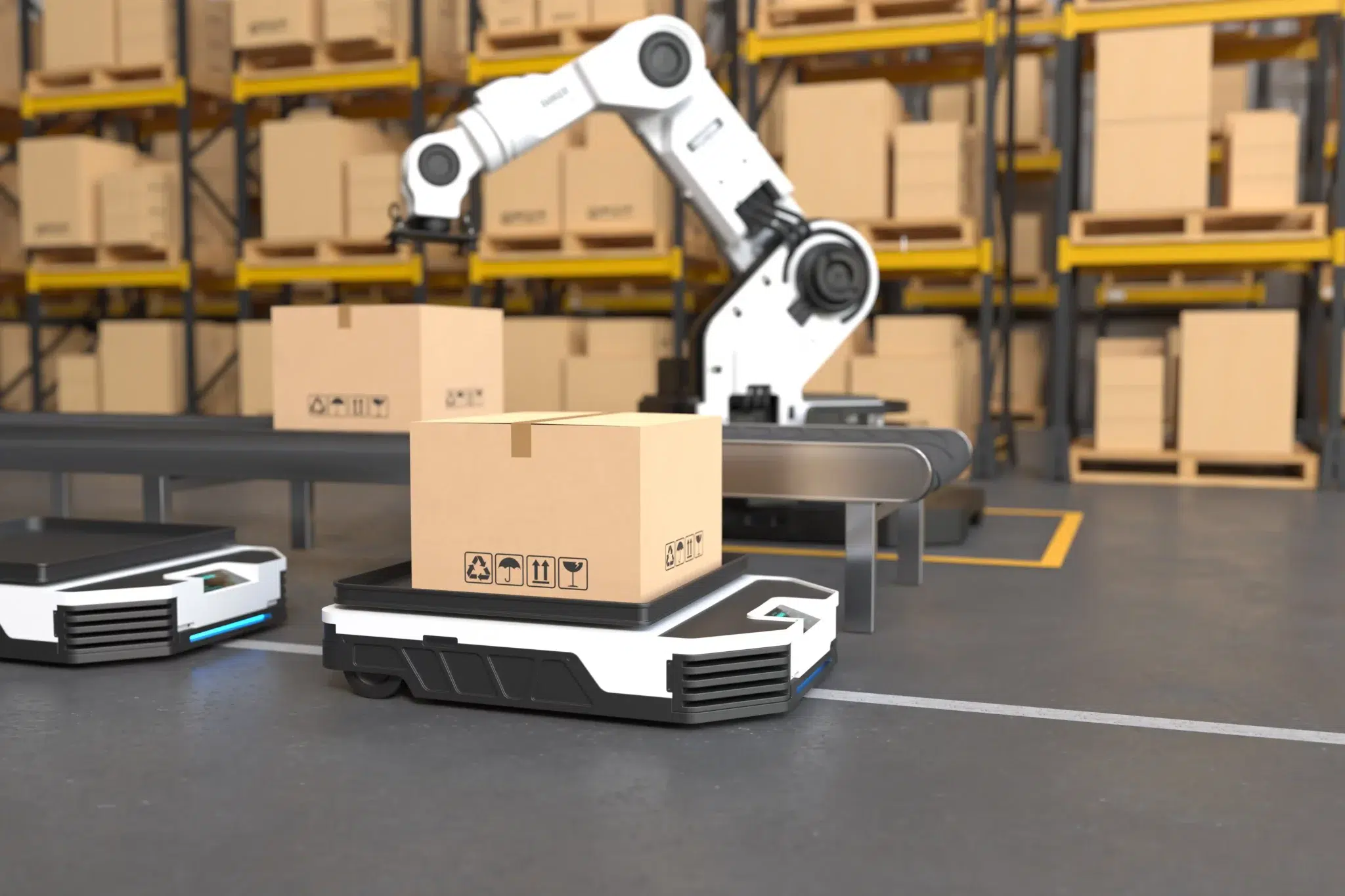
Warehouse automation enables companies to increase productivity and reduce picking errors. Technologies such as picking robots, automated conveyors and warehouse management systems(WMS) play a crucial role.
Example: an SME can use a WMS to optimize storage, monitor stock levels in real time, and automate the distribution of tasks between employees and robots, if any.
The impact of AI and Big Data on logistics management
Artificial intelligence (AI) and Big Data are revolutionizing supply chain management, making it possible to anticipate demand, optimize inventories and reduce logistics costs.
Key benefits :
- More accurate e-commerce logistics forecasts to avoid stock-outs.
- Optimization of delivery routes to reduce lead times and costs.
- Automate procurement decisions using predictive systems.
Managing returns: a major challenge
With the growth of online shopping, e-commerce returns are becoming a strategic issue. Efficient returns logistics make it possible to :
- Reduce returns processing costs.
- Improve the customer experience by offering simple, fast solutions.
- Minimize environmental impact by recycling returned products.
Companies are investing in automated solutions to facilitate returns management and optimize their e-commerce logistics performance.
Why are these trends crucial for SMEs in 2025?
Small and medium-sized businesses need to adapt quickly to new logistics trends if they are to remain competitive with the major e-commerce players. The integration of new trends is essential to reduce costs, optimize flow management and meet consumers’ increasingly demanding expectations in terms of delivery and sustainability.
Lower logistics costs
Logistics optimization enables companies to reduce operating costs while guaranteeing quality service. Today, automation, predictive logistics and the integration of digital solutions are essential for optimizing warehousing, improving transport and reducing order processing costs. By adopting these innovations, SMEs can better manage their inventories, minimize errors and gain logistical efficiency.
Optimizing the customer experience
Efficient logistics have a direct impact on customer satisfaction. Consumers expect fast deliveries, accurate tracking options and smooth returns management. By implementing omnichannel logistics and improving e-commerce inventory management, SMEs can build customer loyalty, increase conversion rates and reduce cart abandonment due to long delivery times.
Sustainability at the heart of logistics concerns
Consumers and environmental regulations are forcing companies to adopt more environmentally-friendly strategies. Sustainable logistics is becoming a real lever for differentiation and a competitive factor. There are several ways to achieve this:
- The use of electric or low-emission vehicles for deliveries.
- Optimizing eco-friendly packaging to reduce waste.
- The adoption of circular logistics models, favoring the recycling and revalorization of returned products.
- The integration of technological tools to optimize routes and limit the carbon footprint of shipments.
By anticipating these changes, SMEs can reduce their costs, improve their brand image and strengthen their competitiveness in the e-commerce market.

How can you adopt these trends in your company?
Integrating new logistics trends means more than simply updating processes. To take full advantage of them, companies need to adopt appropriate solutions, automate their operations and train their teams in the new tools.
Choosing the right logistics tools for your e-commerce business
Investing in high-performance software solutions is essential for improving logistics flow management and optimizing costs. The adoption of a TMS (Transport Management System), OMS (Order Management System) and WMS (Warehouse Management System) enables the various stages of the supply chain to be efficiently structured. These technologies facilitate inventory management, optimize delivery routes and centralize orders.
Integrate OMS, TMS and WMS technologies
- OMS (Order Management System): centralize orders, synchronize inventories in real time, and optimize logistics flow management by providing greater visibility.
- TMS (Transport Management System): Improves shipment management, selects the most efficient carriers and helps reduce logistics costs.
- WMS (Warehouse Management System): Automating warehouse management optimizes storage, reduces picking errors and improves e-commerce logistics performance.
The integration of these tools enables companies to increase their operational efficiency while guaranteeing a better customer experience.
Train your teams in logistics 4.0
Theadoption of new technologies cannot be fully effective without an increase in team skills. Training employees in real-time logistics, warehouse automation and data analysis tools ensures a smooth transition to optimized logistics.
A company that relies on continuous training of its teams is better prepared to integrate new solutions, manage flows efficiently and adapt to market changes. By developing a culture of innovation, SMEs can gain in competitiveness and agility in the face of constant industry change.
Anticipating and integrating logistics innovations
The rapid evolution of e-commerce logistics means that companies need to adapt to the trends of 2025 in order to improve their profitability and customer experience. Automation, artificial intelligence and sustainable logistics will play a key role in this transformation.
A solution like Shippingbo makes iteasy to integrate these innovations, offering centralized management of inventory, orders and shipments.
Need to optimize your e-commerce logistics and reduce your transport costs?
Find out how Shippingbo can help you, and benefit from personalized advice to optimize your strategy. Contact us today!
