
Shipping hazardous materials in e-commerce requires much more than organization. Between strict regulations, transport constraints and safety risks, e-tailers need to redouble their vigilance. This article provides a step-by-step guide to managing your sensitive products with the appropriate logistics tools.
Selling regulated products online involves much more than simply managing inventory or selecting a carrier. When it comes to e-commerce hazardous materials, e-tailers need to combine logistical efficiency with strict compliance with safety standards. Between incident risks, traceability requirements and red tape, managing this type of product can quickly become a headache.
- What are hazardous materials in e-commerce?
- Risks and obligations related to the online sale of hazardous materials
- Shippingbo, the logistics solution for hazardous materials e-commerce
Yet there are software solutions that can make these logistics easier and smoother, while guaranteeing impeccable compliance. Here’s a look at the best practices for shipping your sensitive products with peace of mind.
What are hazardous materials in e-commerce?
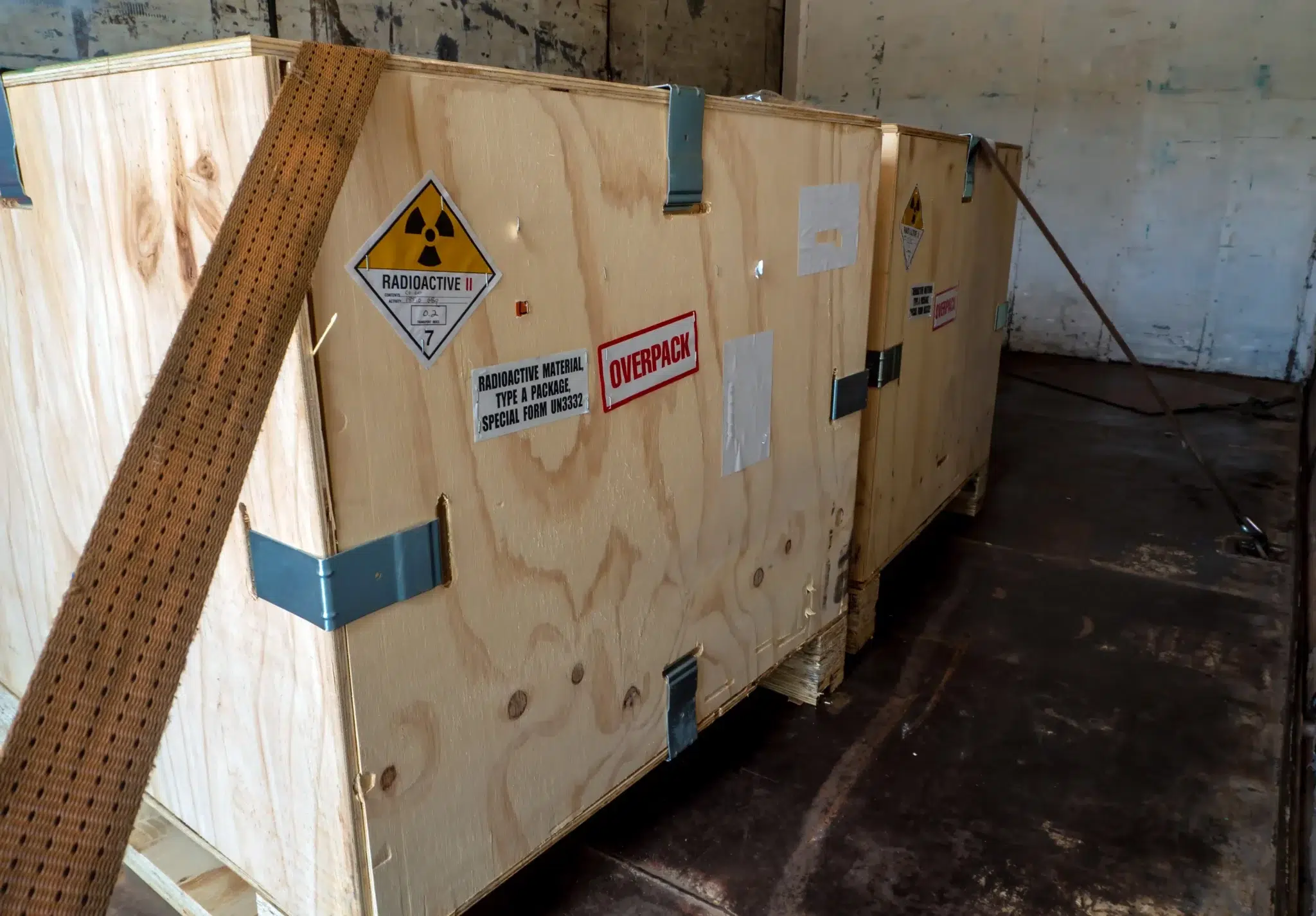
Before shipping a product, it is crucial to ensure that it does not fall into the category of hazardous materials, as their transport is strictly regulated. In e-commerce, this vigilance is essential to avoid penalties, incidents or delivery refusals. But what exactly does this term mean? And how do you identify the products concerned?
Regulatory definition (ADR, IATA, IMDG)
A hazardous material is a substance or object whose physical or chemical properties may pose a health, safety or environmental hazard during transport. This includes risks of flammability, toxicity, corrosion or explosion. These materials are governed by strict international regulations, which vary according to the mode of transport used: ADR for road transport in Europe, IATA for air transport, and IMDG for sea transport.
Each of these regulations imposes specific requirements in terms of packaging, labeling, signage, prior declaration and mandatory documentation. For example, a product classified as flammable cannot be shipped in a simple cardboard box without a regulatory label or declaration attached. These standards evolve regularly, which means we have to keep a constant watch on compliance.
For e-tailers, mastering these standards is not only a legal obligation, but also a reputational and business continuity issue. An error in classification or an omission in documentation can lead to refusal of transport, fines, or even suspension of activity on certain marketplaces. Hence the importance of relying on logistics tools capable of centralizing and automating the management of these complex requirements.
Examples of products concerned (cosmetics, aerosols, flammable liquids, etc.)
In e-commerce, many common products are classified as hazardous materials. Cosmetics containing alcohol, perfumes and aerosols (deodorants, shaving foams) are concerned because of their flammability. Lithium batteries, ubiquitous in electronic equipment, represent a fire hazard. Also included are glues, paints, cleaning products and certain food supplements. For merchants, ignoring this classification can lead to shipment refusals, or even customs blockages. Correctly identifying these products as soon as they enter stock is therefore a logistical priority.
Specific logistics and storage constraints
Storing hazardous products can’t be improvised. They must be kept in secure areas, often separated from the rest of the stock, ventilated and equipped with regulatory signage. These areas must also limit interactions between incompatible substances (e.g. acids and bases). The traceability of each batch, specific storage conditions (temperature, humidity), and compliance with expiration dates must be rigorously managed. An appropriate WMS can automate this management, limit the risk of human error, and optimize order preparation while complying with regulatory requirements.
Risks and obligations related to the online sale of hazardous materials
Selling hazardous materials in e-commerce does not stop at identifying them. The merchant must also guarantee safe handling, proper transportation and regulatory documentation. Non-compliance can have serious consequences, both logistically and legally. This section deciphers the main risks to be mastered for a responsible and sustainable business.
Safety issues for the warehouse and teams
The presence of flammable, corrosive or toxic products in a warehouse represents a danger for logistics teams. Incorrect handling or inadequate storage can lead to serious incidents such as fire, leakage or product breakage, exposing teams to immediate danger. Preventing these risks requires rigorous logistics organization and the right tools for managing hazardous materials.
Merchant liability and regulatory compliance
The dealer is legally responsible for compliance with all applicable regulations. This includes compliance with ADR, IATA, local and European directives. In particular, he must ensure :
- correctly declare dangerous goods to carriers,
- provide the required compliance documents (safety data sheet, labeling, declaration),
- use packaging approved for transport,
- choose carriers authorized to handle these products,
- archive proof of conformity.
An oversight or mislabeling can result in fines, delivery delays or even export bans.
Frequent carrier restrictions and bans
Not all carriers accept dangerous goods. Some systematically refuse aerosols for relay point deliveries, while others prohibit the shipment of lithium batteries by air because of the risk of fire. It is also common to come across restrictions on the quantities transported, the types of packaging authorized, or even geographical limitations: some countries simply do not accept the import of certain substances.
What’s more, requirements can vary from one carrier to another, making the task even more complex for an ill-equipped e-merchant. A misdirection or the wrong logistical choice can result in a hold-up at pick-up, costly delays or outright cancellation of the shipment.
The merchant must therefore ensure that the type of product, packaging, signage and mode of transport are perfectly aligned. To achieve this effectively, the ideal solution is to use automated logistics software such as Shippingbo, whichautomatically assigns the right carrier to each order, according to product specifications and current regulations. It’s an essential lever for greater fluidity, compliance and peace of mind.
Shippingbo, the logistics solution for hazardous materials e-commerce
The complexity of regulated logistics doesn’t have to hold back the development of your e-commerce business. With Shippingbo, you can automate all your operations while ensuring full compliance with transport and safety standards. Here’s how our software suite meets the specific challenges of sensitive materials.
Secure inventory management via our WMS
Shippingbo’s WMS module enables real-time inventory control, with optimized management of secure storage areas. This fine-tuned management also guarantees complete traceability at every stage, an essential condition for regulatory compliance.
Specific settings for sensitive products
Shippingbo enables each product to be parameterized according to its level of hazard: ADR class, transport restrictions, storage conditions, nature of container, etc. These parameters are integrated into the system as soon as the product is created, and are automatically taken into account throughout the logistics cycle. These parameters are integrated into the system as soon as the product is created, and are automatically taken into account throughout the logistics cycle. This includes assignment to a compatible warehouse, referral to an authorized carrier, and generation of the necessary documents. As a result, your teams no longer have to worry about technical issues, as compliance is natively integrated into the solution.
Automatic selection of ADR/IATA-compatible carriers
Our intelligent TMS connects your logistics system to ADR/IATA-certified carriers, with dynamic, automated selection based on package characteristics: flammability, toxicity, presence of lithium batteries, specific dimensions, etc. Shippingbo applies customizable business rules to assign the most suitable carrier to each order, according to safety, lead-time or cost criteria. In this way, you avoid shipment blockages, loading refusals or customs sanctions, while optimizing your delivery performance.
Management of compliance documents and labelling
With Shippingbo, all the regulatory documents required for the shipment of hazardous materials are automatically generated from the interface. These include standardized hazard labels, dangerous goods declarations, safety data sheets and proof of transport compliance. Each document is customized according to product and delivery channel, ready to be printed or attached to the package. By centralizing this documentation, Shippingbo simplifies the work of its teams, reduces the risk of human error and secures relations with carriers and authorities.
Automate your workflows while remaining compliant
One of Shippingbo’s key strengths is its ability to automate the entire logistics process, including for sensitive products. From a single order, the system orchestrates stock management, carrier selection, document printing and post-delivery tracking. Each step is governed by strict compliance rules. This automation not only reduces errors and delays, but also relieves your teams of complex manual tasks. This saves you time, increases reliability and, above all, guarantees compliant, worry-free logistics.
Unifying compliance, speed and logistics performance
Shippingbo offers a unique platform that combines all the levers of efficient logistics: regulatory compliance, processing speed and shipping fluidity. By combining WMS, OMS and TMS in a single tool, you centralize all your operations, from receipt to the last mile. This not only reduces the risk of errors, but alsoimproves customer satisfaction thanks to reliable deliveries, even for complex products. With Shippingbo, hazardous materials logistics become a source of competitiveness, not a brake on growth.
Master complexity, grow your business
The online sale of hazardous materials needn’t stand in the way of your ambitions. By mastering regulatory requirements, automating logistics flows and working with certified carriers, you can turn a constraint into a real competitive advantage.
With Shippingbo, you have a complete, reliable and scalable solution for managing your inventory, preparing your orders, generating your compliance documents, and shipping according to the rules. All with a single interface and fully automated processes.
Do you sell sensitive or regulated products? Simplify your logistics with Shippingbo, the solution designed for growing e-tailers:
