

Zalando is Europe’s leading fashion marketplace. But to sell there, you have to meet strict criteria: rigorous selection, controlled logistics and perfectly compliant product sheets.
Dans cet article, découvrez les modèles de vente proposés, les frais à anticiper, les prérequis techniques et les bonnes pratiques logistiques pour réussir sur Zalando sans mettre en péril vos performances e-commerce.
- Pourquoi vendre sur Zalando ?
- Qui peut vendre sur Zalando ?
- Les modèles pour vendre sur Zalando
- Quelles sont les étapes pour vendre sur Zalando ?
- Quels frais prévoir pour vendre sur Zalando ?
- Les défis logistiques pour réussir sur Zalando
- ZFS ou logistique propre : comment choisir ?
- Comment optimiser ses ventes sur Zalando ?
- Quel rôle peut jouer Shippingbo pour vendre sur Zalando ?
Vendre sur Zalando peut permettre à une marque de mode ou à un retailer de gagner en visibilité auprès d’une audience européenne qualifiée. Mais l’accès à la marketplace Zalando suppose de respecter des critères précis : catalogue conforme, stock fiable, qualité de service, expéditions maîtrisées et gestion efficace des retours. Dans ce guide, découvrez les conditions pour vendre sur Zalando, les différences entre Zalando Partner Program, Connected Retail Zalando et Zalando Fulfillment Solutions, les frais à anticiper et les bonnes pratiques logistiques pour réussir sur la plateforme.
Pourquoi vendre sur Zalando ?

Zalando peut devenir un canal stratégique pour les marques de mode qui veulent gagner en visibilité, toucher une audience européenne et développer une approche marketplace maîtrisée. Mais la plateforme impose aussi des standards élevés en matière de catalogue, de service client, de livraison et de retours.
La force de Zalando Europe tient à sa spécialisation mode et lifestyle. Pour une marque textile, une marque de chaussures ou une marque d’accessoires, la plateforme offre un environnement plus affinitaire qu’une marketplace généraliste. Cela en fait un canal complémentaire au site e-commerce, utile pour renforcer une stratégie omnicanale et accélérer sa visibilité à l’échelle européenne.
Cette opportunité s’accompagne toutefois d’un niveau d’exigence élevé. Réussir à vendre sur la marketplace Zalando ne consiste pas seulement à publier un catalogue. Il faut aussi maintenir des stocks fiables, traiter rapidement les commandes, tenir ses délais d’expédition et gérer efficacement les retours, qui sont particulièrement structurants dans l’univers mode.
Qui peut vendre sur Zalando ?
Zalando ne fonctionne pas comme une marketplace ouverte à tous les vendeurs. La plateforme sélectionne ses partenaires selon plusieurs critères : localisation, qualité du catalogue, complémentarité de l’offre, capacité logistique et cohérence avec son positionnement mode et lifestyle. Vendre sur Zalando suppose donc d’être accepté par la plateforme et de respecter ses critères commerciaux, catalogue et logistiques. L’accès n’est pas automatique pour tous les vendeurs.
Les critères liés à l’entreprise
Pour vendre sur Zalando en tant que marque ou retailer, il faut d’abord être un vendeur professionnel structuré. Zalando attend une entreprise établie, une présence e-commerce réelle, une capacité à gérer le service client et une conformité légale et commerciale claire. Le sujet n’est pas seulement d’être présent en ligne, mais d’être capable d’opérer une activité marketplace à un niveau compatible avec les attentes de la plateforme.
Les critères liés au catalogue
Le catalogue Zalando doit être cohérent avec l’univers mode et lifestyle de la plateforme. Les produits doivent être neufs, correctement catégorisés, accompagnés de données produits Zalando complètes, de visuels conformes, de tailles et couleurs bien renseignées, ainsi que d’un prix et d’un stock fiables. Une marque peut avoir une belle offre, mais ne pas être retenue si son catalogue n’est pas assez structuré ou s’il n’apporte pas une vraie complémentarité.
Les critères logistiques
La dimension logistique fait partie intégrante des conditions Zalando. La marketplace évalue la disponibilité produit, les délais de préparation, la fiabilité de l’expédition, le suivi colis, la gestion des retours et, plus largement, la capacité du vendeur à respecter ses standards de service. C’est souvent là que la réussite ou l’échec se joue une fois l’accès obtenu.
Les modèles pour vendre sur Zalando
Pour vendre ses produits sur Zalando, il faut aussi choisir le modèle le plus adapté à son organisation. Entre Zalando Partner Program, Connected Retail Zalando et Zalando Fulfillment Solutions, le bon choix dépend de votre structure, de vos stocks, de vos magasins éventuels et du niveau de contrôle logistique que vous souhaitez conserver.
Le Zalando Partner Program
Le Zalando Partner Program permet à des vendeurs professionnels de proposer leurs produits sur Zalando tout en conservant une partie importante de leur pilotage commercial et opérationnel. Le vendeur reste responsable de la qualité de son catalogue, de ses stocks, de son service et de sa capacité à traiter les commandes selon les exigences de la marketplace. Zalando indique que le programme permet aux vendeurs partenaires de proposer des produits neufs, d’encaisser le prix des produits vendus et d’accéder, selon les cas, à des services logistiques ou marketing.
Pour une marque déjà structurée, ce modèle permet de vendre ses produits sur Zalando tout en gardant la main sur une partie de l’exécution. Il suppose en revanche une vraie maîtrise des flux, car la qualité opérationnelle reste de la responsabilité du vendeur.
Connected Retail
Connected Retail Zalando s’adresse plutôt aux retailers qui disposent de magasins physiques et souhaitent connecter leurs stocks boutique à Zalando. Ce modèle permet de rendre certains stocks magasins disponibles en ligne, à condition de disposer d’une organisation fiable pour préparer et expédier les commandes depuis les points de vente.
Ce modèle est particulièrement pertinent pour les enseignes qui veulent digitaliser leur stock local, accélérer leur rotation et développer une logique de ship-from-store. Il demande en contrepartie une très bonne synchronisation entre stock magasin, commandes reçues et préparation en boutique.
Zalando Fulfillment Solutions
Zalando Fulfillment Solutions permet de déléguer une partie de la logistique à Zalando. Ce modèle peut simplifier certaines opérations, mais il implique aussi d’évaluer les coûts, les contraintes de stock, les flux d’approvisionnement et la perte éventuelle de contrôle sur certains aspects opérationnels. fileciteturn21file0
Le bon arbitrage dépend du volume, des marchés servis, de la maturité logistique et du niveau de contrôle souhaité par la marque. ZFS Zalando peut être un levier de simplification, mais il n’est pas mécaniquement supérieur à une logistique propre bien orchestrée.
Quelles sont les étapes pour vendre sur Zalando ?
Avant de lancer votre intégration, il faut d’abord vérifier votre éligibilité. Cela implique de confirmer que votre entreprise est bien structurée, que votre catalogue est cohérent avec l’univers mode ou lifestyle, que vos données produits Zalando sont suffisamment propres et que votre organisation logistique peut absorber les exigences de la plateforme.
L’étape suivante consiste à préparer un catalogue produit conforme. Cela inclut les titres, descriptions, photos, tailles, couleurs, EAN, catégories, prix, stocks et informations de livraison ou de retour. Sur Zalando, la qualité du catalogue ne relève pas du détail : elle conditionne à la fois l’acceptation, la visibilité et la conversion.
Il faut ensuite choisir votre modèle logistique. Selon votre organisation, vous pouvez vous orienter vers Zalando Fulfillment Solutions, une logistique propre, un prestataire 3PL, du ship-from-store via Connected Retail Zalando, ou une approche hybride. Ce choix dépend de vos volumes, de vos marchés, de vos coûts et du niveau de contrôle souhaité.
Vient ensuite la connexion des flux. Pour réussir votre intégration Zalando, vous devez connecter le catalogue, les stocks, les commandes, les expéditions, le tracking et les retours. C’est cette étape qui transforme une stratégie marketplace en organisation réellement opérable.
Enfin, il faut suivre les performances. Disponibilité, délais, taux d’annulation, retours, satisfaction client et conformité marketplace doivent être suivis dès le lancement, car ce sont eux qui permettent d’identifier rapidement les points de friction.
Quels frais prévoir pour vendre sur Zalando ?
Les frais pour vendre sur Zalando peuvent dépendre du modèle choisi, des services utilisés, des catégories produits, des options logistiques et des services marketing. Avant de se lancer, une marque doit comparer les commissions, les frais logistiques, les éventuels coûts d’intégration, les coûts de retour et l’impact sur ses marges.
Plutôt que de figer des pourcentages potentiellement instables, il faut raisonner en postes de coûts. Le vrai sujet n’est pas seulement la commission Zalando, mais la rentabilité nette après logistique et service.
Les principaux coûts à anticiper sont :
- la commission marketplace
- les frais logistiques si vous utilisez ZFS
- les coûts de transport si vous gardez une logistique propre
- les coûts de retour
- les frais d’intégration ou d’outil
- les coûts marketing
- l’impact final sur la marge nette
Une marque de chaussures, par exemple, ne doit pas seulement regarder le potentiel de volume sur Zalando. Elle doit aussi mesurer l’effet des retours, des coûts de transport, de la préparation et du niveau de remise nécessaire pour rester compétitive.
Les défis logistiques pour réussir sur Zalando
La réussite sur Zalando dépend fortement de la logistique Zalando mise en place par la marque ou le retailer. Stock disponible, préparation rapide, expédition Zalando conforme, suivi fiable et retours Zalando bien traités ont un impact direct sur l’expérience client, la performance vendeur et la marge.
Synchroniser les stocks
Le stock Zalando doit être fiable en permanence. Cela suppose d’éviter les surventes, de maintenir un stock disponible à la vente, de gérer précisément les tailles et couleurs, d’assurer des mises à jour fréquentes et de coordonner les stocks entre entrepôts et boutiques. Une marque de chaussures qui vend sur Zalando et sur son site doit par exemple synchroniser ses tailles disponibles en temps réel pour éviter les annulations.
Préparer les commandes rapidement
Zalando attend une exécution rapide et fiable. Cela implique de tenir des délais courts, de savoir absorber les pics de commandes, de limiter les erreurs de picking, d’assurer un contrôle qualité rigoureux et de maintenir un packaging conforme. Une préparation lente ou instable dégrade rapidement la qualité perçue du vendeur.
Gérer les expéditions et le tracking
L’expédition Zalando ne se résume pas à un envoi. Elle suppose le bon choix transporteur, la génération correcte des étiquettes, la remontée des statuts, les notifications et la mise à disposition d’un tracking fiable. Un suivi incomplet augmente les demandes SAV et affaiblit l’expérience client.
Maîtriser les retours
Les retours Zalando font partie de l’économie normale de la mode. Il faut donc organiser leur réception, le contrôle qualité, la remise en stock, le remboursement ou l’échange, tout en tenant compte de leur impact sur la marge. Un retour traité trop lentement peut bloquer la remise en vente d’un article et dégrader la rentabilité d’une collection.
Gérer plusieurs canaux en parallèle
Une marque qui vend sur Zalando vend souvent aussi sur son site e-commerce, parfois en boutique, et parfois sur d’autres marketplaces. Il faut alors gérer un stock partagé, des règles de priorisation et des logiques de routage. C’est ici que la gestion des commandes marketplace et la synchronisation des stocks marketplace deviennent structurantes.
ZFS ou logistique propre : comment choisir ?
Le choix entre Zalando Fulfillment Solutions et une logistique propre dépend du volume de commandes, de la maturité opérationnelle, de la stratégie de stock, des coûts, des pays ciblés et du niveau de contrôle souhaité. Une marque peut aussi adopter une approche hybride selon ses collections, ses marchés ou ses canaux.
| Criteria | ZFS | Logistique propre | Point de vigilance |
| Contrôle opérationnel | Plus faible | Plus fort | Le gain de simplicité peut réduire la maîtrise du service |
| Coûts | Variables selon les services | Variables selon l’organisation interne | Il faut raisonner en marge nette, pas uniquement en coût facial |
| Rapidité de déploiement | Souvent plus simple à lancer | Plus dépendante de votre structure | La facilité de départ ne garantit pas la meilleure scalabilité |
| Gestion des stocks | Stock envoyé à Zalando | Stock piloté par la marque ou son 3PL | L’arbitrage dépend de la stratégie de stock et des marchés visés |
| Retours | Process plus intégré côté Zalando | Process géré par la marque | La vitesse de remise en stock reste un point clé |
| Expérience client | Plus standardisée | Plus personnalisable | La personnalisation peut être un avantage de marque |
| Scalabilité | Intéressante pour certains volumes | Forte si l’organisation est bien structurée | Le bon choix dépend de la maturité logistique réelle |
| Complexité technique | Peut être simplifiée sur certains volets | Plus dépendante de vos outils et flux | Une orchestration solide reste nécessaire dans les deux cas |
Comment optimiser ses ventes sur Zalando ?
Une fois l’intégration lancée, l’enjeu est d’améliorer durablement la performance sur la marketplace Zalando. Pour vendre sur Zalando en tant que marque, il faut travailler à la fois la qualité du catalogue, la disponibilité produit, la maîtrise des retours et le pilotage des bons KPI marketplace.
Travailler la qualité des fiches produits
Pour vendre sur Zalando en tant que marque, la qualité des fiches produit reste un levier central. Titres clairs, photos, tailles, matières, descriptions, guides de tailles et attributs complets augmentent à la fois la conformité catalogue et la conversion.
Fiabiliser la disponibilité produit
Une bonne performance marketplace repose aussi sur la disponibilité réelle des articles. Il faut éviter les ruptures, limiter les annulations, anticiper les réassorts et suivre de près les tailles les plus demandées.
Maîtriser les délais et retours
La promesse doit rester réaliste. Une préparation rapide, des retours traités vite et une remise en stock fluide améliorent l’expérience client et réduisent les pertes de marge liées à une mauvaise organisation.
Suivre les KPI marketplace
Le pilotage passe par quelques KPI clés : taux de disponibilité, délais de préparation, taux d’annulation, taux de retour, réclamations, marge nette et performance par SKU. Sans cette lecture, il devient difficile d’identifier les références à fort potentiel et les points de friction logistiques.
Quel rôle peut jouer Shippingbo pour vendre sur Zalando ?
Une fois la stratégie Zalando définie, l’enjeu devient opérationnel : centraliser les commandes, synchroniser les stocks, automatiser les expéditions, suivre les statuts et gérer les retours. Shippingbo aide les marques et retailers à connecter leurs canaux de vente, leurs entrepôts, leurs boutiques, leurs transporteurs et leurs marketplaces pour fiabiliser l’exécution logistique.
Concrètement, Shippingbo peut aider à centraliser les commandes Zalando avec les autres canaux, synchroniser les stocks pour éviter les surventes, router les commandes vers le bon entrepôt ou magasin, automatiser les règles d’expédition, suivre les statuts et le tracking, faciliter la gestion des retours et piloter une stratégie marketplace multicanale. Dans cette logique, un OMS aide à centraliser les commandes, un WMS à fiabiliser les stocks et la préparation, et un TMS à piloter les expéditions, le tracking et les retours sur plusieurs canaux.
Shippingbo ne garantit pas l’acceptation par Zalando et ne remplace ni Zalando, ni Zalando Fulfillment Solutions, ni les transporteurs. La solution aide les marques à orchestrer leurs flux de commandes, stocks, expéditions et retours lorsqu’elles vendent sur plusieurs canaux.
Structurez votre croissance sur Zalando avec Shippingbo
Vendre sur Zalando peut offrir une forte visibilité aux marques de mode, mais la marketplace impose aussi un niveau d’exigence élevé. Avant de se lancer, il faut vérifier son éligibilité, préparer un catalogue Zalando conforme, choisir le bon modèle de vente, anticiper les frais et structurer sa logistique Zalando. La réussite dépend ensuite de la fiabilité des stocks, de la rapidité de préparation, de la qualité des expéditions et de la gestion des retours.
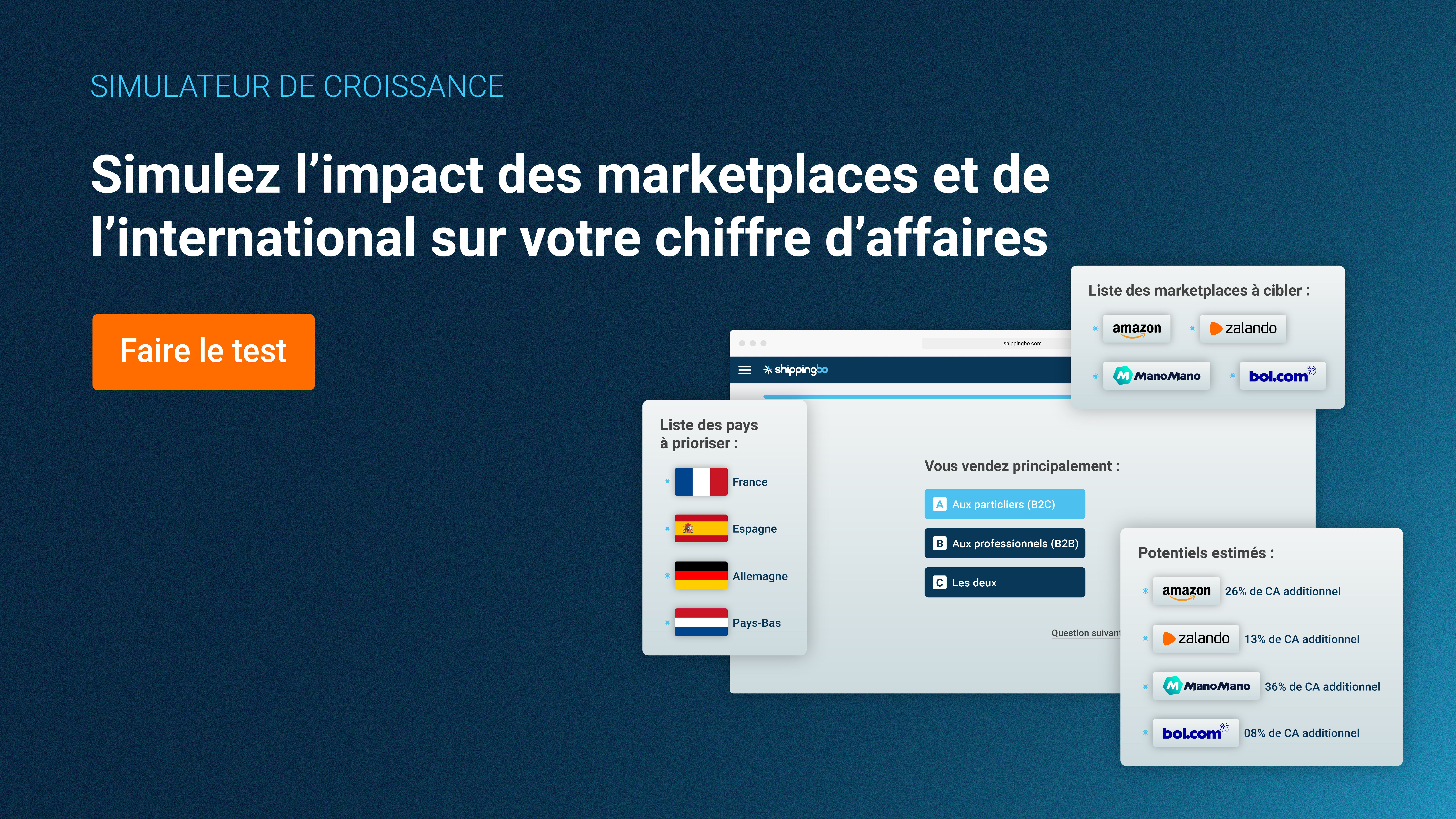
Testez gratuitement notre simulateur de développement de chiffre d’affaires sur les marketplaces :
FAQ
Pour vendre sur Zalando, une marque ou un retailer doit vérifier son éligibilité, préparer un catalogue conforme, choisir un modèle de vente adapté, connecter ses flux produits et logistiques, puis respecter les standards de la marketplace en matière de stock, livraison, service client et retours.
Zalando sélectionne ses partenaires selon plusieurs critères, notamment la localisation, la complémentarité du catalogue, la qualité de l’offre et la capacité à respecter les exigences de la plateforme. L’accès n’est pas automatique pour tous les vendeurs professionnels.
Le Zalando Partner Program permet à des vendeurs professionnels de proposer des produits neufs sur Zalando. Le vendeur peut gérer une partie de ses opérations et peut aussi accéder à des services logistiques ou marketing proposés par Zalando.
Le Partner Program s’adresse aux marques et vendeurs qui veulent vendre leur catalogue sur Zalando. Connected Retail concerne plutôt les retailers disposant de magasins physiques et souhaitant connecter leurs stocks boutique à la plateforme pour expédier certaines commandes depuis leurs points de vente.
Les frais dépendent du modèle choisi, des services utilisés, des catégories produits, des options logistiques et marketing, ainsi que des coûts internes liés à l’intégration, au transport, aux retours et au service client.
Zalando Fulfillment Solutions peut simplifier certaines opérations logistiques, mais le choix dépend des volumes, des coûts, des marchés ciblés, de la stratégie de stock et du niveau de contrôle souhaité. Une marque peut aussi conserver sa propre logistique ou adopter un modèle hybride.
Glossaire
Partner Program
A sales model offered by Zalando to brands and e-tailers, enabling them to sell directly while managing their own stock and logistics.
Connected Retail
Model enabling physical stores to sell their local stock on Zalando and prepare orders in-store.
OMS (Order Management System)
Order management system. It centralizes flows, synchronizes inventories in real time, and automates logistics processing between all sales channels.
ZFS (Zalando Fulfillment Solutions)
In-house logistics service offered by Zalando. It takes care of storage, preparation, shipping and returns management on behalf of the merchant.
Packshot
Standard product image on white background, used as the main visual in a product sheet. It is mandatory on Zalando.
SLA (Service Level Agreement)
Service levels expected by Zalando, including shipment times, cancellation rates and returns processing.
Buy Box
Priority visibility slot for an offer on a product sheet. Merchants complying with logistics KPIs are highlighted.
EPR (Responsabilité Élargie du Producteur)
European regulation requiring certain sellers to take responsibility for managing their waste (packaging, textiles, etc.), depending on the country.