
Logistics chatbots have become a strategic lever for automating order tracking, streamlining returns management and reducing pressure on after-sales service. But to deliver a reliable, truly omnichannel response, it’s not enough to add a conversational interface: it also needs to be fed with structured data from a high-performance OMS. Find out how to intelligently connect your AI to your logistics flows to gain in productivity, consistency and customer experience.
The pressure on logistics teams has never been greater. Faster lead times, more sales channels, greater demands for transparency: each order now generates a continuous flow of information. Against this backdrop, the logistics chatbot is emerging as a strategic lever for absorbing repetitive requests, making responses more reliable and smoothing the logistics customer experience.
- What is a logistics chatbot, and how does it work?
- Why should you implement a chatbot in your e-commerce logistics operations?
- Real-World Use Cases: The Chatbot as a Tool for Logistics Managers
- Successfully integrating your chatbot with Shippingbo
But beware: a chatbot is not efficient by nature. It becomes truly effective when connected to structured, centralized and synchronized data. Without OMS, without coherence between WMS and TMS, even the best logistics AI can produce incomplete or contradictory answers. So the challenge is not just technological, it’s architectural.
According to the 2025 Digital Trends in Operations Survey by PwC, 57% of supply chain managers have integrated AI into several functions of their operations, underlining the acceleration of automation as a performance lever in the face of current logistics disruptions
This article explains in detail how a logistics chatbot works, why it is transforming the way e-commerce teams are organized, and, most importantly, why its effectiveness depends directly on the quality of data orchestration.
What is a logistics chatbot, and how does it work?

A logistics virtual assistant is a conversational interface capable of interacting with a customer or employee to provide reliable operational information. Unlike a simple FAQ module, it doesn’t just display static content: it interrogates business systems in real time.
The role of a logistics chatbot is to act as an intelligent data access layer. When a customer asks where his parcel is, the chatbot identifies the order, queries the OMS to check its status, then consults the TMS to retrieve the latest transport event. It then provides a contextualized, understandable and actionable response.
In line with the principles of Logistics 4.0, the chatbot becomes a natural extension of the digital ecosystem. It does not replace existing tools, but makes them accessible through natural language. It transforms access to information into a seamless, immediate, and standardized process.
Definition of conversational AI in the supply chain
Conversational AI is based on the ability to understand a request formulated in natural language and transform it into a structured action. Thanks to NLP (automatic language processing), the system identifies the real intention behind the sentence. A request such as “I still haven’t received anything” can thus be interpreted as a follow-up request or a suspicion of delay.
In supply chain AI, understanding language is only the first step. Value is created when the AI interrogates a source of truth. It needs to read an exact, dated and traceable status, not extrapolate an answer.
This discipline is essential to preserve order traceability. Every piece of information transmitted to the customer must be traceable to an actual event in the system. This strengthens the credibility of the service and reduces disputes.
Differences Between Scripted Chatbots and Generative AI
A scripted chatbot operates based on predefined decision trees. It guides the user through structured choices. This approach offers stability but quickly reaches its limits when faced with complex or differently phrased requests.
Conversely, a generative AI like ChatGPT Logistics understands a wide variety of formulations and adapts its discourse. It improves the fluidity of exchanges and gives the impression of advanced personalization.
However, without connection to business systems,generative AI can produce a plausible but incorrect answer. In logistics, this margin of error is unacceptable. The most robust strategy is therefore based on a hybrid approach: conversational generation for fluidity, systematic WHO interrogation for reliability.
Why Implement a Chatbot in Your E-Commerce Logistics?
In most e-commerce organizations, more than half of customer inquiries involve order tracking or returns. These requests are legitimate, but they tie up significant resources. A logistics chatbot allows you to automate the response process.
For the logistics manager, the impact is immediate. Teams are less interrupted by recurring questions. They can concentrate on managing exceptions and optimizing logistics flows. This reduction in interruptions directly improves logistics time savings.
Automated order tracking (TMS)
Automatic parcel tracking is the first high-ROI use case. The chatbot queries the TMS to retrieve the latest transport event, then reformulates the information in a way that is clear to the customer.
This transport automation eliminates the need for manual searches, and greatly reduces the number of support calls. Customers receive an immediate response, even outside normal business hours.
When the system detects an issue, the chatbot can trigger a proactive customer notification. Informing the customer before they contact support improvesthe delivery experience and reduces frustration.
This approach also contributes to last-mile optimization, as it streamlines the management of delivery attempts and any potential failures.
Simplified returns management and customer satisfaction
Chatbot-based returns management transforms a sensitive moment into a seamless experience. The chatbot identifies the order via the OMS, verifies eligibility for a return, and guides the customer step by step.
This automated process reduces processing errors and speeds up restocking. It improves e-commerce customer satisfaction while ensuring compliance with internal policies.
Thanks to centralized data, the chatbot ensures complete consistency across all channels. This consistency enhances the logistics customer experience and reinforces brand perception.
Drastic reduction in service tickets and support costs
A customer service chatbot automatically handles simple requests and flags complex cases. This approach reduces the overall volume of tickets and improves team productivity.
By leveraging e-commerce self-service tools, the chatbot structures customer interactions. Each interaction can be analyzed to identify areas for improvement. This process drivessupply chain innovation. Data from these conversations reveals pain points and informs strategic decisions.
Case studies : The chatbot at the service of the logistics manager
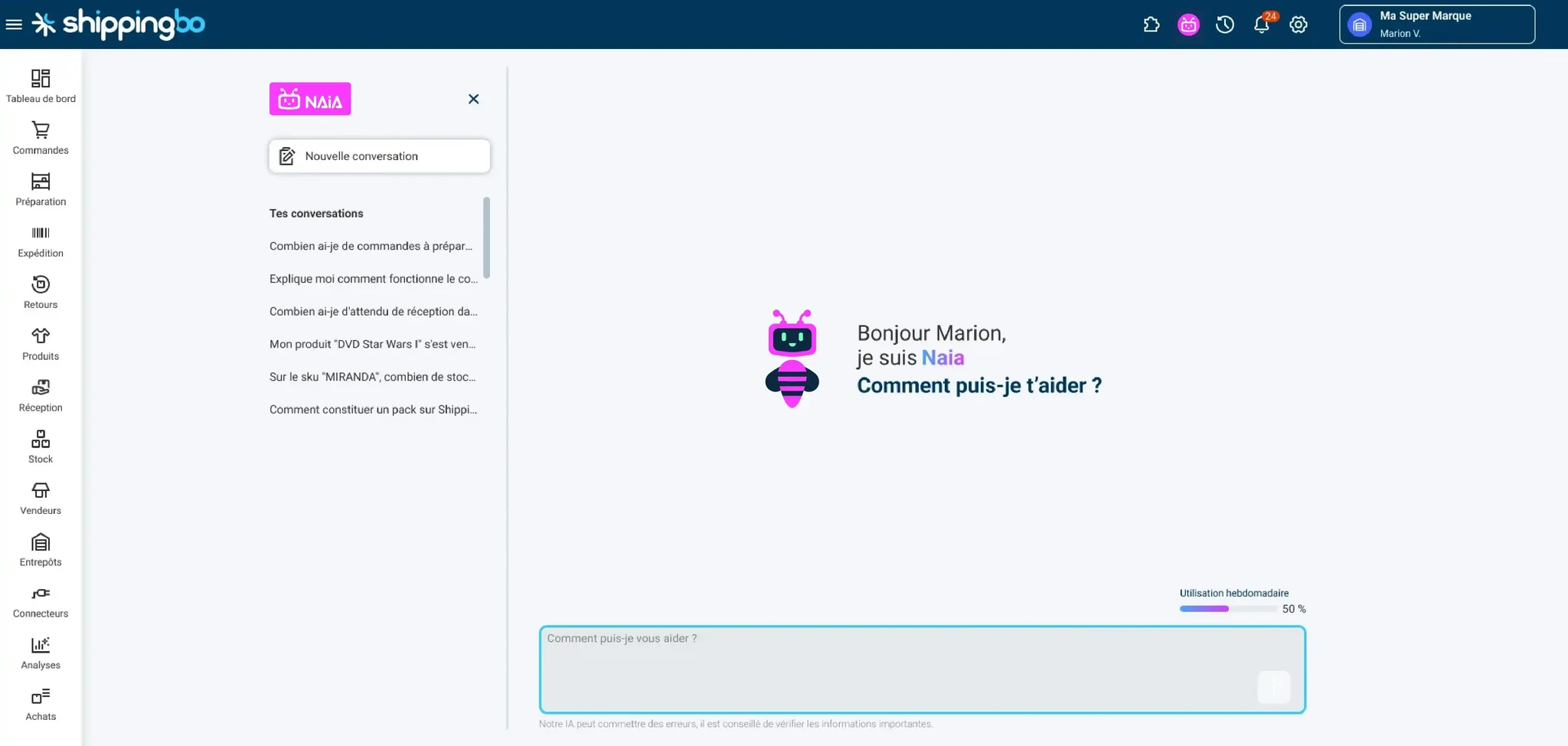
The logistics chatbot is not limited to customer relations. When connected to reliable data, it also becomes an internal decision-making tool for the logistics manager and his teams.
By centralizing information in a single source and then making it accessible through a conversational interface, the chatbot reduces back-and-forth communication between teams. This accessibility improves omnichannel flow management: the response remains consistent, regardless of the input channel.
The key factor is data quality. Without an OMS, the chatbot must “make do” with fragmented information, which compromises order traceability and increases the volume of escalations.
Real-time information for the end customer
The customer expects an immediate, comprehensible response, in line with operational reality. Thanks to automatic parcel tracking anchored in the TMS and contextualized by OMS, the chatbot provides the exact status of the order and the next step.
Value goes beyond status. A good chatbot explains what the event means (preparation, pick-up, attempt, incident) and indicates what the customer can do now. This clarity improves thedelivery experience and reduces frustration.
When an incident is detected, the chatbot can trigger a proactive customer notification or direct customers to the right action. In the event of failure, it can guide towards a re-delivery of the parcel, or clarify rescheduling times according to your rules.
Decision support for warehouse teams (WMS)
Internally, the chatbot can serve as a quick gateway to operational information. Connected to the WMS, it allows users to instantly check the preparation status, any bottlenecks, or the current stage of the process without having to contact a supervisor.
This approach boosts warehouse productivity: fewer micro-interruptions, fewer manual searches, and greater continuity in execution. Teams focus on value-added tasks rather than on transmitting information.
For the logistics manager, the chatbot can also serve as a control relay. Based on a logistics dashboard, it facilitates access to useful indicators: volume to be dispatched, orders close to cut-off, preparation anomalies or transport incidents.
Successfully Integrate Your Chatbot with Shippingbo
An effective logistics chatbot relies on a solid integration with the OMS. Without centralization, responses risk being inconsistent, since each system has its own version of the truth: status as seen on the front end, shipping events, preparation in progress, returns initiated. The chatbot then becomes nothing more than a “talker” that adds to the confusion instead of reducing it.
The OMS: The Essential Brain Powering Your Chatbot
The OMS centralizes all orders, statuses, and business rules. Through an OMS chatbot interface, the AI queries a single source, which prevents inconsistencies across channels.
In concrete terms, WHO provides the chatbot with four essential elements:
- Complete order context: source channel, overall status, delivery promise, any multi-package splits, and event history.
- Structured and actionable statuses: clear distinction between preparation (WMS) and transportation (TMS) to precisely identify the bottleneck.
- Centralized business rules: management of changes before the cutoff, return routes, eligibility criteria, and prioritization by channel.
- Secure management of complex cases: multi-package orders, multi-warehouse orders, marketplace orders, or B2B orders, with clear and consistent explanations for the customer.
Scalability and omnichannel vision of logistics data
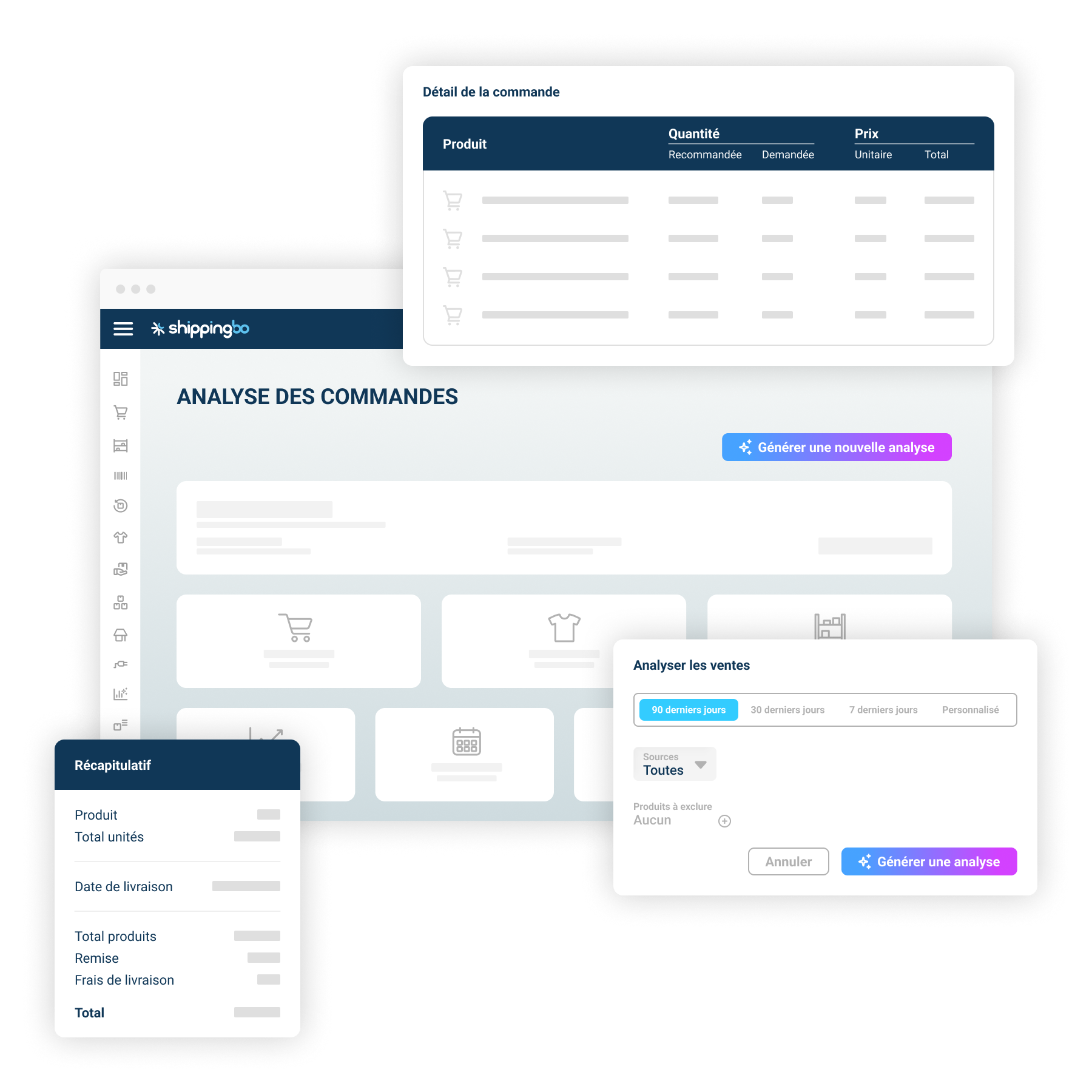
A unified architecture enables the chatbot to absorb peaks in activity without degrading the quality of responses. During promotional periods, the volume of requests often increases faster than orders. Without reliable automation, support and logistics teams quickly find themselves saturated.
The report Top 10 Supply Chain Trends 2025 published by ASCM, highlights that near-real-time data visibility is becoming a key element in the resilience and responsiveness of supply chains, particularly in complex omnichannel contexts.
Centralization through the OMS prevents unreliable connections and ensures consistent responses, regardless of the channel. This forms the foundation of a stable omnichannel customer relationship, even as workflows become more complex. This consistency also supportslast-mile optimization. By combining TMS events with OMS context, the chatbot provides information and suggests the right action at the right time, thereby enhancingthe delivery experience.
Finally, scalability also involves growth: new warehouses, carriers, or channels. Centralized data makes it possible to integrate these changes without rewriting the workflows, while maintaining seamless management of logistics flows.
To concretely measure the impact of a centralized architecture, let’s compare the differences between a chatbot that isn’t connected to an OMS and a chatbot that is natively powered by unified data.
Make the chatbot a reliable and strategic tool
A logistics chatbot is only truly effective when it relies on structured and reliable data. When connected to an OMS, it becomes a tool for efficiency, consistency, and control over workflows. It automates repetitive tasks, streamlines access to information, and frees up time for high-value-added decisions.
With this in mind, Shippingbo has launched its own intelligent chatbot, Naia, directly integrated into the platform’s interface. The aim is not to add a simple conversational module, but to enable users to interact naturally with their data: find a status, understand a blockage, get an explanation of a flow, or navigate more quickly through their operations.
Designed as a native extension of the OMS, WMS, and TMS, the Shippingbo chatbot— a true AI logistics assistant—will transform the user experience by providing intelligent, contextualized, and immediate access to logistics information.
Want to find out how AI can simplify your day-to-day operations? Request a demo and discover how Shippingbo Intelligence can help you with your logistics management:
FAQ
It automates order tracking, handles returns without human intervention, and reduces callsto customer service by 30%, all while improvingthe logistics customer experience.
Yes. Through Shippingbo’s APIs, the chatbot has real-time access to inventory levels and fulfillment statuses so it can provide customers with accurate information—even in the event of out-of-stock items, picking delays, or fulfillment hold-ups.
It depends on the complexity of the AI, the channels to be covered, and the level of integration (OMS/WMS/TMS). In most cases, the ROI is achieved quickly thanks to productivity gains, a reduction in support requests, and improved customer retention.
Glossary
OMS (Order Management System)
A system that centralizes orders, their statuses, business rules (cut-off, split, priorities), and history to orchestrate omnichannel fulfillment.
WMS (Warehouse Management System)
A warehouse management system that controls order fulfillment (picking, packing), inventory, and internal flows.
TMS (Transport Management System)
A transport management system that manages carriers, labels, tracking, events, and incidents.
Conversational AI
Technology that enables conversation in natural language and transforms a request into an action (response, form, or triggering of a process).
NLP (Natural Language Processing)
Automatic processing of natural language; used to understand intent (tracking, return, incident) and extract information (order, email, carrier).
Cut-off
Processing deadline; after this time, a change (address, cancellation) may no longer be possible.
Last mile (last kilometer)
the final stage of delivery to the recipient; the main source of incidents and support inquiries.