
Automating order picking has become an imperative for e-tailers who want to remain competitive. The pick and print workflow, which combines guided picking and the printing of transport labels, helps to increase productivity, reduce errors and speed up shipping. Find out how to optimize this key process with a WMS connected to a TMS, and why a unified solution like Shippingbo is a game-changer.
In an e-commerce context where speed, precision and customer satisfaction are no longer negotiable, every logistical step counts. That’s where the pick and print workflow comes in, a key process that automates order preparation by intelligently combining picking and the printing of shipping documents.
Adopted by e-tailers who want to increase productivity while reducing errors, pick and print relies on the synergy between a high-performance WMS and anautomated labeling solution. The result? Smoother flows, better team management and an optimized customer experience.
- What is Pick and Print workflow in logistics?
- Key steps to optimize your picking
- Print automation: print for shipping (role of TMS)
- Shippingbo: the unified solution that streamlines your Pick and Print process
In this article, we take you step-by-step through the implementation of an efficient pick and print workflow: from picking methods to the role of the TMS, from mobile tools to the KPIs to monitor, and the advantages of a unified solution like Shippingbo.
What is Pick and Print workflow in logistics?
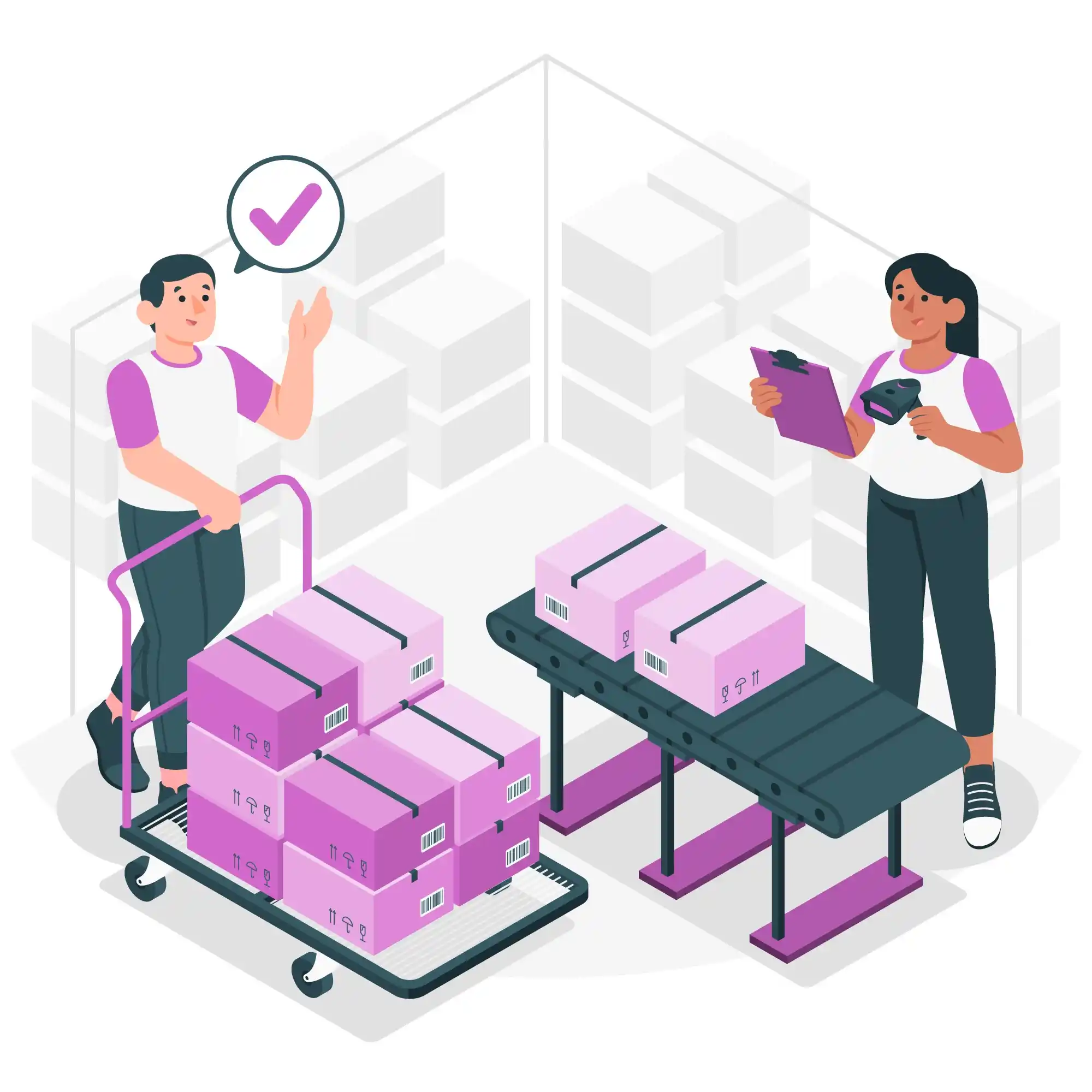
The term pick and print refers to an automated logistics workflow that combines the picking of items with the labeling and printing of delivery notes (print). This approach aims to optimize automated order preparation reduce errors and speed up dispatch. Today, it is a competitive lever for e-tailers.
The study“The French, delivery and logistics 2024” reveals that consumers expect faster delivery services, and are increasingly sensitive to logistics efficiency and technological innovation.
Definition: the fusion of picking and printing for e-commerce
Traditionally, picking and labeling are two separate processes. With the pick and print workflow, these steps are brought together: once the items have been picked, the shipping label and/or delivery note are automatically generated and printed via a mobile terminal (PDA or handheld). This unified workflow fits naturally into a pick and pack and print methodology.
This model enables real optimization of picking and labeling, reducing downtime between each preparation phase.
Why automation is vital to e-merchant growth
E-commerce order volumes are exploding under the combined effect of market growth, channel diversification (marketplaces, D2C, social commerce…) and recurring peaks in activity. At the same time, end customers expect a level of service that’s close to zero defects: fast delivery, up-to-date tracking information, and no oversights in the package.
To cope with this operational complexity without increasing costs or compromising quality, e-tailers need to rely on intelligent, automated logistics workflows. One of the most effective today is the pick and print workflow, which centralizes and synchronizes preparation and dispatch.
Here’s why it has become a strategic performance lever:
- It drastically reduces picking errors, thanks to operator guidance and real-time scanning. Fewer returned parcels, less after-sales service, greater customer satisfaction.
- It generates increased logistics productivity: teams prepare more orders, faster, without mental overload or unnecessary repetition. Measured productivity gains can reach +50%, thanks in particular to the elimination of manual tasks.
- It improves parcel traceability, as each scanned item is automatically associated with the order and carrier. Dispatch is triggered without delay, with fully automated label printing after picking.
- It smoothes out seasonal peaks, making teams more autonomous (even temporary workers), and limiting dependence on long training courses or experienced operators.
In other words, pick and print is no longer an option reserved for large groups. It’s an essential technological building block for all merchants who want to scale without stress and without compromising on the customer experience.
Key steps to optimize your picking
The heart of an efficient pick and print workflow is the WMS (Warehouse Management System), which orchestrates stock management, warehouse organization and order preparation in real time. Properly configured, it becomes a genuine picking assistance system, capable of guiding operators step by step, limiting unnecessary movements and ensuring the safety of each preparation stage. It’s the system that determines the speed, precision and reliability of the entire process.
According to a 2024 study on warehouse automation and order fulfillment, only 10% of sites today are “almost fully automated”, and 75% combine manual operations with handheld technologies (such as PDAs) for picking (source: Warehouse Automation & Order Fulfillment Study).
Choosing the right method: picking by wave, zone or part
There are several pickingeach with its own specific objectives.
Batch picking is ideal for processing several orders at once, with similar products. It reduces unnecessary travel.
Zone picking, on the other hand, allows each picker to remain within a defined zone, which is particularly effective in large warehouses.
Finally, piece picking is suitable for small volumes or single-item orders. For a retailer, the right method depends on volume, product type and, above all, WMS.
WMS software such as Shippingbo makes it possible to combine these methods as required.
| Picking method | Principle | Benefits | Ideal for |
| Picking by wave | Simultaneous preparation of several orders in a single circuit | – Reduce travel – Save time – Rationalize routes | Large volumes with recurring references |
| Picking by zone | Each operator only picks from a defined area of the warehouse | – Optimization of teamwork – Fewer crossovers between operators | Large warehouses or large teams |
| Picking by piece | Order-by-order, item-by-item preparation | – Easy to implement – fewer errors for one-off orders | Small volumes or limited range of orders |
The importance of zoning and location in reducing errors
Warehouse zoning and location strategy are essential for reducing picking errors and speeding up set-up times. By intelligently segmenting space (picking, reserve, receiving zones, etc.), we limit the number of operators crossing paths, avoid flow breaks and facilitate the training of new recruits.
A good WMS can locate products precisely, taking into account logical criteria such as aisle, floor, bin, output frequency and product type. It can also dynamically adapt locations according to volumes or periods of high activity.
The result: picking routes are optimized, confusion between similar references is avoided, and operators gain in efficiency. The equation is simple: well-executed warehouse zoning optimization = faster, smoother, more reliable picking.
PDA-guided picking: the end of picking errors
The use of a WMS coupled with mobile terminals (such as PDAs or handhelds) radically transforms daily life in the warehouse. These tools, often portable or mounted on carts, enable pickers to be guided step by step through their picking rounds.
The PDA (Personal Digital Assistant) is a small mobile computer equipped with a touch screen and an integrated barcode reader. It displays the list of items to be picked, the picking order and locations, and validates each step in real time.
The handheld scanner, often used as a manual scanner, operates either via a cable or via Bluetooth with the PDA. It allows products to be scanned at each sampling to check conformity.
Once the right product has been scanned, the system automatically validates the action, and in some cases triggers printing of the transport label associated with the order. This process, called Scan and Print,ensures immediate marking, without the need for a fixed labeling station.
This technology brings two major benefits:
- It virtually eliminates human error, by preventing the wrong item from being picked.
- It considerably reduces training time, which is crucial during seasonal peaks when temporary staff need to be trained quickly.
By making picking more visual, interactive and secure, PDAs and handhelds are becoming indispensable allies in high-performance e-commerce logistics .
Print automation: print for shipping (role of TMS)
Once picking has been finalized and validated, the automated order preparation flow naturally continues with the next step: printing shipping documents (transport label, delivery note, etc.).
It is at this precise moment that the TMS (Transport Management System) takes over, in direct synchronization with the WMS, to automatically orchestrate the choice of carrier, generate the appropriate labels and ensure error-free, time-saving shipping.
Automatic label release after quality control
Once picking has been completed and the items packed, the order enters the quality control phase: a decisive stage in the logistics process. This involves checking that the parcel conforms to the original order, whether in terms of weight, dimensions, quantity or product references. This validation can be carried out automatically using a connected scale or a final scan.
As soon as this verification is validated by the WMS, the TMS takes over and automatically starts printing the transport label, without any manual intervention. This label contains all the information required for shipment: carrier, delivery method, barcode, customer address and tracking number.
In certain cases, the system can also simultaneously print the delivery note, which physically accompanies the parcel. Everything is generated from a single interface, synchronized with the preparation order.
This stage is essential in picking and dispatch quality control, as it ensures perfect correspondence between the prepared parcel and the delivery data, while guaranteeing impeccable logistical traceability right up to the last mile.
Secure multi-label and multi-carrier printing
An advanced TMS doesn’t just generate a single label for a single carrier. It manages all automatic parcel labeling, whatever the volume of orders or the number of logistics partners involved.
A good system allows you to :
- Multi-order printing after picking, either in batches to save time, or on demand for greater flexibility.
- Dynamic carrier selection, based on pre-defined criteria: shipping cost, delivery time, destination, package weight, and end-customer preferences.
This intelligent operation is based on configurable rules, often linked to contractual agreements with carriers or specific operational constraints (e.g. express delivery, relay delivery, international…).
Printing thus becomes a secure, centralized and industrialized process, fully integrated into the logistics workflow. This avoids routing errors, optimizes transport costs, and automates multi-carrier management without overloading operations.
Integrate delivery note and label into a single workflow: Pick and Pack and Print
The real advantage of the pick and print workflow is its ability to combine the critical preparation stages into a single, coherent, seamless flow:
- Guided picking via PDA or handheld scanner
- Optimized packaging (pack)
- Printing shipping documents (print)
With a solution like Shippingbo, it’s possible tointegrate both the delivery note and thetransport labelinto a single flow, generated automatically as soon as the parcel is validated. This approach eliminates the need to print the documents separately, saving considerable time.
By reducing the number of handling operations required, this system greatly reduces the risk of human error, speeds up shipping by avoiding backtracking or missing printouts, and makes packing stations smoother, simpler and more ergonomic.
Pick and pack and print has thus become an operational standard, concentrating all logistical intelligence in an automated flow, in the service of performance and reliability.
Shippingbo: the unified solution that streamlines your Pick and Print process
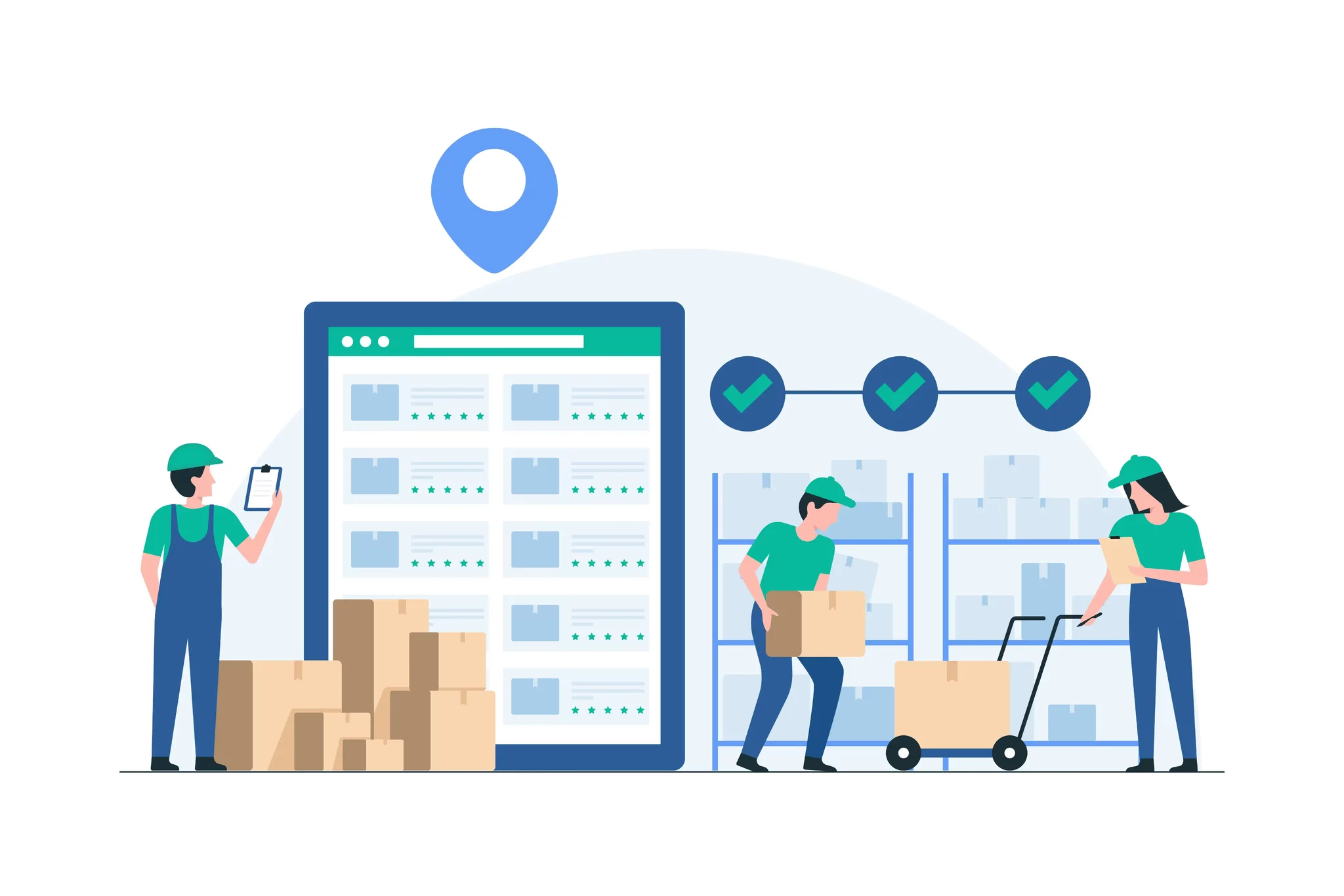
Faced with the growing complexity of logistics flows, more and more merchants are looking for a solution capable of centralizing, automating and optimizing every stage of order preparation. This is exactly what Shippingbo offers, with its all-in-one software suite OMS + WMS + TMSdesigned to industrialize your pick and print workflow, without weighing down your operations.
Shippingbo is more than just connected tools: it’s a unified platform that enables all the essential building blocks of your logistics to interact, from order orchestration to transport labeling, guided picking, quality control and packaging.
Shippingbo WMS: from guided picking to secure packaging
At the heart of the system, the Shippingbo WMS controls preparation with precision. Thanks to its guided picking system, each operator is assisted by a connected PDA, which indicates in real time the locations to be covered, the products to be picked, and the exact quantities to be processed.
This WMS validates each pick by scan and automatically blocks any input or reference errors. The result: zero confusion, even during busy periods. The operator then packs the order according to a predefined flow, without re-reading or double-checking.
By automating this process, Shippingbo saves precious order-picking time, while ensuring the security of every parcel shipped.
Smooth OMS ↔ WMS ↔ TMS flow for instant labeling
What really sets Shippingbo apart is the total fluidity between OMS, WMS and TMS, three native modules that work in perfect synergy.
- OMS retrieves orders in real time from your sales channels, checks available stock, and automatically allocates the order to the most appropriate warehouse.
- The WMS then takes over to organize and execute picking, according to the most appropriate method: by wave, by zone or by piece.
- Finally, the TMS automatically selects the most advantageous carrier according to your rules, triggers the printing of the transport label, and generates the delivery note.
This OMS → WMS → TMS link enables complete automation of labeling in the warehouse, with no interruption to flows, no re-entry and no risk of error. The entire process takes place in a single, centralized interface, accessible to all operational levels.
Productivity gains and fewer errors for e-tailers
By deploying Shippingbo, e-tailers quickly see tangible results, both in the field and in their performance indicators. Picking errors are drastically reduced, thanks in particular to real-time validation of every item scanned and the obligation to check every step of the way. This rigor contributes directly to a clear improvement in logistics KPIs: processing times are reduced, the error rate drops significantly, the number of orders prepared per hour increases, and the overall reliability of the process is strengthened.
Teams, including temporary staff recruited during the high season, are able to upgrade their skills more quickly. The system’s ergonomics, clear PDA instructions and automation of complex tasks mean that we can achieve good results without relying exclusively on experienced operators.
The system also manages multi-warehouse picking, thanks to intelligent routing rules that take into account stock location, order destination and shipment type. All operations are controlled from a unified dashboard, offering a real-time view of logistics activity, for more responsive, more strategic management, better aligned with growth objectives.
Boost your logistics with seamless Pick and Print
Optimizing your pick and print doesn’t just save time: it lays the foundations for reliable, scalable and performance-driven e-commerce logistics. By combining guided picking,automated labeling andintelligent order orchestration, you reduce operational friction while maximizing your results.
Whether you’re a growing e-tailer, a demanding logistician or an omnichannel brand, you know that every second counts in the preparation chain. And every error is costly – in returns, in after-sales service, but also in brand image. Thanks to a unified OMS / WMS / TMS system, pick and print becomes a concrete lever for optimization: it enables you to prepare more orders, faster, with fewer errors and a seamless customer experience right through to delivery. This operational fluidity also contributes to customer loyalty, by guaranteeing compliant deliveries and consistent service.
With Shippingbo, you choose a solution designed to centralize, automate and streamline your operations, without multiplying tools or friction points. Our technology has already helped hundreds of merchants industrialize their logistics, with visible results from the very first weeks of implementation.
Would you like to see how Shippingbo can transform your warehouse?
Book your personalized demo now and enter a new logistics dimension.

FAQ – Everything you need to know about the Pick and Print workflow
Pick and Pack refers to a process in which the picker carries out picking, then immediately proceeds topacking the order. Pick and Print, on the other hand, adds a layer of automation: the printing of the transport label and delivery note is triggered automatically just after picking validation, often via a scan on a mobile terminal. This saves time and secures shipment without any additional steps.
PDA-guided picking is based on a WMS connected to mobile terminals. The picker receives on his PDA the list of products to be picked, the optimized picking order and the exact locations. Each time a product is scanned, the system validates compliance in real time. Once all items have been collected, the final scan can automatically trigger the printing of shipping documents, in a Pick and Print process.
It’s essential to opt for a WMS that integrates natively with an OMS and a TMS, to manage order picking, inventory, carrier selection and automatic labeling all at once. Shippingbo’s WMS is designed for this: it enables a smooth Pick and Print workflow, with no re-entry, intelligent carrier selection and label printing in real time.
One of the most effective ways of doing this is toautomate the picking flow via a reliable Pick and Print system. Each stage (picking, checking, packing, printing) is validated by scan, eliminating human error associated with manual entry or processing order. By centralizing everything in a connected WMS, the result is more reliable, faster and more efficient logistics.
Glossary – Terms you need to know
PDA (Personal Digital Assistant)
Mobile terminal used in warehouses to guide pickers through picking, scanning and validation tasks.
WMS (Warehouse Management System)
Warehouse management software that controls stock, locations and order picking.
TMS (Transport Management System)
Shipping management system, from carrier selection to label printing.
OMS (Order Management System)
A tool that centralizes orders from different sales channels and orchestrates their processing.
Workflow
Structured, automated sequence of steps in a logistics process.
Pick and Print
Logistics flow in which the printing of transport documents is triggered automatically after picking.
Picking
Picking items from the warehouse to prepare them for shipment.