
French Days are approaching, and with them their share of logistics challenges. From demand forecasts to tool orchestration and omnichannel management, this guide will help you structure your logistics action plan to turn this key period into a performance driver.
Autumn’s French Days are a highlight of the autumn season for e-tailers. Comparable to Black Friday, these promotional days generate a peak in e-commerce activity that can boost sales significantly. To take full advantage of this, well-orchestrated omnichannel logistics are essential.
- What are French Days?
- Logistics challenges
- Operational checklists D-30 / D-7 / D-1 / D+1
- Selling during French Days on marketplaces
- Omnichannel in-store: ship-from-store & click-and-collect
- Measuring performance: KPIs and dashboards
- Use cases: 2 concrete scenarios
- Tools and templates (checklist + capacity spreadsheet)
- FAQ – French Days for e-commerce
This guide offers a clear action plan for preparing French Days logistics in an operational and efficient way.
What are French Days?

Created in 2018 by a collective of major French retailers, French Days have quickly found their place among online retail highlights. Conceived as a local response to Black Friday, these promotional events aim to boost consumption on French platforms while supporting the competitiveness of French merchants.
Both a commercial lever and a logistical challenge, French Days takes place twice a year: first in spring, then in autumn. The autumn 2025 edition is officially scheduled for September 24 to 30, a full week of high-intensity commercial operations.
During the spring 2024 edition, purchases made during French Days represented 2.3% of total annual e-commerce sales in France, confirming their structuring role in the promotional calendar (source: JDN).
Origins and founding brands
The event is the brainchild of six retail giants: Cdiscount, Fnac Darty, La Redoute, Boulanger, Rue du Commerce and Showroomprivé. Their objective? To offer a typically French massive sales campaign, with deep discounts on high-demand products, at a time when e-commerce is traditionally experiencing a revival.
Over the years, many merchants have joined the initiative, whether distributors, marketplaces or own brands. French Days have thus become a key moment for attracting traffic, clearing back-to-school stocks, testing new offers or optimizing the performance of a sales channel.
Fall 2025 calendar: September 24-30
The period from September 24 to 30, 2025, is by no means an insignificant one. It falls between the back-to-school period, already a busy shopping season, and the first Christmas and Black Friday campaigns. It’s a strategic window of opportunity to activate your customer base and attract new buyers.
For e-tailers, this window represents a real opportunity for growth… provided the supply chain keeps pace. Order volumes can double or even triple in a matter of days. This calls for rapidwarehouse ramp-up, rigorous inventory control and absolute fluidity across distribution channels.
Without logistical foresight, even the best promotions can turn into broken promises. Stock-outs, extended lead-times, picking errors, unprocessed returns: the risks are numerous. That’s why it’s essential to combine French Days with structured omnichannel logistics preparation.
Logistics challenges
While French Days are an obvious business opportunity, their success depends above all on the logistical capacity to absorb a sudden peak in activity, concentrated over a few days. For e-tailers, this means rapidly mobilizing resources, securing inventories and ensuring the reliability of their entire operational chain.
Logistical errors are unforgiving during this period. A stock shortage, delivery delay or order synchronization problem can have an immediate impact on the customer experience, post-purchase reviews and customer loyalty.
The key: anticipate, size and automate.
Demand forecasts and capacity planning
Anticipation starts with accurate demand modeling. To forecast French Days demand, it’s essential to analyze data from previous years (orders, average baskets, return rates) and cross-reference them with your current trends (traffic, customer segmentation, new products).
A sound capacity plan is based on several key parameters:
- Average daily absorbable volume,
- Peak preparation times,
- Machine capabilities (scanning, labeling, packaging),
- The number of operators available per time slot.
A logistics simulation spreadsheet enables you to visualize different scenarios and validate whether your organization can handle the load, even in the event of a +30 to +50% increase in orders. If this is not the case, you’ll need to plan for reinforcements or adjust your sales promises.
And don’t neglect inbound warehouse capacities: buffer storage areas, rapid restocking flows, management of bulky or seasonal items.
The aim is to guarantee logistical scalabilitycapable of absorbing a doubling of the load without loss of performance.
According to GfK, in 2024 French Days generated a +15% increase in sales compared to a traditional e-commerce week, which fully justifies a logistical ramp-up.
Omnichannel stock allocation and out-of-stock prevention
French Days are also a full-scale test of your omnichannel strategy. Your inventory must be unified, visible and usable from all points of sale and distribution channels.
A good WMS also enables you toautomate inventory management to guarantee product availability in real time on all channels.
Omnichannel stock allocationletsyouintelligently prioritize shipments according to :
- customer location,
- actual product availability,
- the promise of delivery (SLA).
With a well-configured French Days e-commerce WMS, you can automate this allocation, manage reserve levels, optimize picking zones and avoid incoming stock shortages.
OMS/TMS/WMS orchestration: who does what?
In an omnichannel environment, each system has a precise role to play. But their effectiveness depends on fluid, real-time orchestration.
- OMS for French Days is the orchestra conductor: it aggregates all orders (site, marketplaces, stores), allocates the processing warehouse and synchronizes stock levels continuously. It avoids channel conflicts and double-booking.
- The WMS then takes over to launch the order picking. Thanks to automated scenarios (global pick, multi-order, express prioritization), it guarantees a near-zero error rate, even with temporary staff.
- The TMS for peak orders finalizes the chain by automatically allocating the carrier according to cost, lead time or geographical criteria. It prints the label, communicates the tracking number to the customer and manages any returns.
This combination ensures that the promise of J+1 delivery is kept, even with high volumes. And in the event of saturation, OMS can distribute the load to a second warehouse or activate omnichannel ship-from-store relay.
Operational checklists D-30 / D-7 / D-1 / D+1

Making a success of French Days doesn’t just happen. To keep up with the pace, avoid mistakes and absorb the volume, it’s crucial to prepare each stage of the logistics chain in advance, according to a well-structured back-planning schedule.
Warehouse (WMS): picking, packing, labeling, quality control
Anticipate with a load simulation on D-30, check inventory and make sure your machines are operational. A week before, prepare your picking zones and adjust your workforce. The day before, launch theautomation picking packing and check thatautomatic conveyor labeling is active. The next day, analyze your logistics KPIs and identify areas for improvement.
Transport (TMS): routing, cut-off, delivery promise
Upstream, simulate intelligent parcel routing and validate your carriers. A week beforehand, set your cut-offs for French Days shipments to guarantee compliance with SLAs. Check carrier mappings, and the next day, adjust if necessary with the e-commerce multi-carrier.
Customer service: proactive communication and FAQs
The key to a smooth experience is proactive customer communication. Prepare a clear and accessible French Days delivery FAQ. Set up an online discussion channel and anticipate frequently asked questions. After the sale, analyze customer feedback to refine your messages.
| Period | Warehouse (WMS) | Transport (TMS) | Customer service |
| J-30 | – Load simulation- Inventory check- Machine control- Storage area adjustment | – Intelligent parcel routing simulation – Critical zone analysis – Carrier testing | – Creation of the French Days delivery FAQ – Definition of response scripts |
| J-7 | – Organization of picking zones- Adjustment of workforce- Temporary staff training | – Definition of shipment cut-offs – Sharing of SLAs with internal teams | – Activation of online chat – Publication of FAQ on channels |
| J-1 | – Launch ofautomated picking and packing – Verification ofautomatic conveyor labelling – Reinforced quality control | – Carrier mapping test- Verification of volumes/labels- Validation of lead times by carrier | – Proactive customer communication (email/SMS) – Reminder of deadlines and options |
| J+1 | – Monitoring of logistics KPIs – Analysis of preparation errors – Real-time adjustments | – Revision of transport flows – Activation of multi-carrier e-commerce if necessary | – Analysis of customer feedback- Optimization of responses- Adaptation of FAQs |
Selling during French Days on marketplaces
For e-tailers, French marketplaces such as Cdiscount, Fnac Darty and La Redoute are essential growth drivers during French Days. They concentrate a massive audience, often in search of bargains, and have immediate distribution power.
But capturing this demand requires rigorous technical preparation, particularly with regard to integration flows, publication of offers, and logistical synchronization.
Cdiscount, Fnac Darty, La Redoute integrations
First of all, check that your marketplace integrations (Cdiscount/Fnac) are fully operational. This means :
- automatic forwarding of orders to your OMS,
- logistics status synchronization,
- real-time stock updates on each platform.
A connected OMS, like the one offered by Shippingbo, centralizes all your marketplace flows in a single interface. This simplifies :
- high-volume order processing,
- real-time adjustment of inventory to sales,
- and automated shipment notifications to customers.
Catalog & promo price synchronization
Publishing your products is good. Displaying them with the right offers and prices at the right time is even better. Synchronizing catalog and promotional prices is often one of the weak points of intense sales events.
Tip: take advantage of product publication APIs or native OMS connectors to automate these actions and avoid having to manage marketplaces manually.
Omnichannel in-store: ship-from-store & click-and-collect
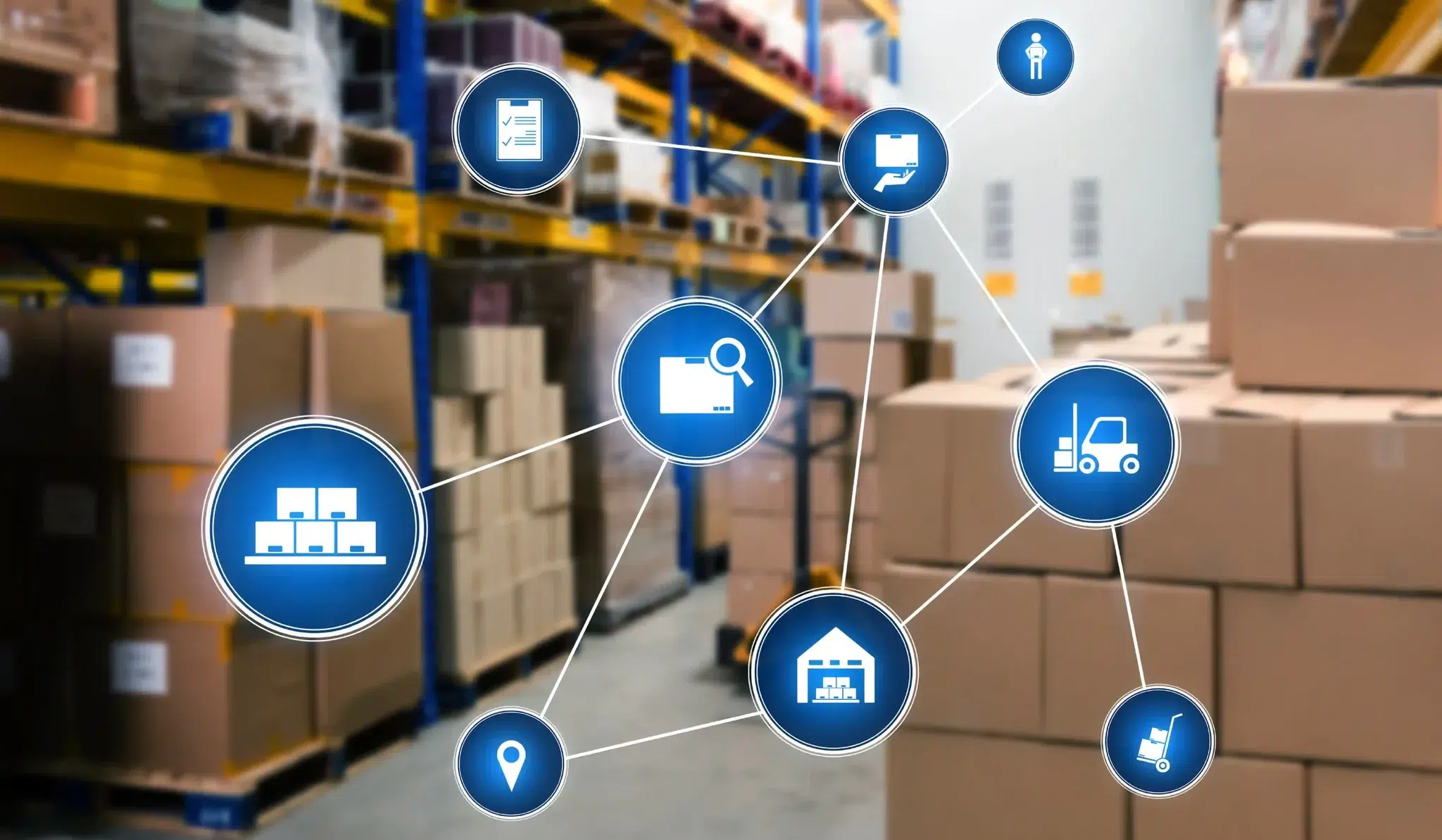
During French Days, every order counts – and every stock point too. By implementing an omnichannel strategy, we can better distribute the logistics load between warehouses, preparation hubs and physical stores.
There are two ways to make the most of the store network: ship-from-store, which transforms the store into a dispatch center, and click & collect, which shifts delivery to the customer’s premises for direct collection at the point of sale.
Order prioritization, restocking, alert thresholds
For this model to work, fine-tuned logistics orchestration is required between OMS, WMS and the store network.
The omnichannel ship-from-store must be able to be dynamically activated according to several criteria:
- distance between the store and the customer’s address,
- immediate availability from stock,
- local preparation capacity.
A good omnichannel OMS allows you to configure SLA order prioritization rules. This means that orders with express or D+1 commitments will be automatically routed to the stock point capable of meeting them on time, even if this is not the main warehouse.
At the same time, consider setting up alert thresholds for each point of sale. As soon as a product falls below a critical threshold, automated restocking can be triggered. This limits the risk of local stock-outs, and guarantees uniform product coverage between stores.
Measuring performance: KPIs and dashboards
In logistics, what can’t be measured can’t be improved. During French Days, the increase in flows demands a real-time vision of operational performance. Management must not wait until the end of the campaign.
It must be daily, visual and actionable.
OTIF, breakage rate, transport costs, delivery NPS
Here are the key indicators to follow during French Days:
- OTIF e-commerce (On Time In Full): this is the reliability indicator par excellence. It measures the proportion of orders delivered to the right address, on time and with the right part number. An OTIF below 95% indicates a logistics coordination problem.
- Incoming shortage rate: this indicator shows the proportion of orders lost or delayed due to lack of available stock. It is essential to cross-reference it with your initial forecasts to adjust your alert thresholds and allocation rules.
- Optimize transport costs: during peak periods, shipping costs can soar if routing is not optimized. Track the extra costs associated with express, carrier mapping errors or unusual distances.
- Quality of transport service (delivery NPS): a satisfied customer looks not just at the price, but at the promise kept. Measuring delivery-related Net Promoter Score lets you know whether the post-purchase experience is strengthening or weakening loyalty.
Use cases: 2 concrete scenarios
🔹 F ashion / textile – Automate preparation to absorb the peak
A ready-to-wear brand, equipped with a double warehouse, anticipated French Days by implementing a WMS with fully automated picking and packing (wave picking, automatic labeling, mobile PDA). As a result, each picker has gone from 30 to 45 orders per hour on average, representing a real 45% increase in productivity. Thanks to end-of-line quality control, the error rate fell to zero on over 4,000 parcels shipped. Improved order conformity led to a 12% drop in returns, according to their CRM.
🔹 Maison / déco – Omnichannel to serve the customer promise
A pure player in the home furnishings sector has activated an omnichannel ship-from-store strategy based on its network of 10 boutiques. Thanks to a connected OMS, web orders were automatically routed to the nearest store, when local stock permitted. This enabled 34% of orders to be processed directly at the point of sale, reducing average delivery times by 2 days (TMS data). The cost of shipping these local orders dropped from €5.80 to €3.65 on average, representing a 1.6x reduction in transport costs.
Tools and templates (checklist + capacity spreadsheet)
To help you prepare for French Days, we are providing an operational checklist to be adapted according to your flows, and a spreadsheet to simulate logistics spreadsheet to size your capacities.
Move up a gear with Shippingbo
French Days isn’t just about spectacular discounts. The real difference lies behind the scenes, with omnichannel omnichannel logistics reactive, automated and controlled. This is what guarantees smooth execution, stock availability, on-time delivery and optimum customer satisfaction.
Shippingbo does just that, offering you a complete suite of OMS / WMS SUITE / TMS SUITE designed for the challenges faced by SMB and SMB+ e-tailers. Thanks to over 200 plug & play integrations (marketplaces, CMS, carriers), you can centralize, automate and optimize your entire supply chain, without multiplying tools or teams.
With Shippingbo, you can :
- absorb peaks in e-commerce activity without operational overload,
- automate workflows from basket to label to dispatch,
- manage returns seamlessly with industrialized reverse logistics,
- control your key indicators in real time from a single dashboard.
Ready to make this back-to-school season a lasting logistical success, not just a fleeting performance?
Don’t let logistics hold you back during French Days. Find out how Shippingbo can help you automate your operations, keep your delivery promises and absorb peaks without stress.
👉 Request a personalized demo today :

FAQ – French Days for e-traders
Yes, if your OMS can assign orders to the warehouse stock closest to the customer. This reduces lead times and optimizes logistics costs.
Activate reverse logistics on D+1 with automatic label generation and reintegration into stock if the product is resaleable.
Aim for a complete cycle time of 20 minutes, from picking to label printing, by automating key stages via OMS/WMS connections.
Activate a continuity plan with cloud redundancy, active backups and manual workflows to ensure critical shipments.