

La préparation de commande e-commerce désigne l’ensemble des étapes qui permettent de prélever, contrôler, emballer et expédier les produits commandés. Son efficacité a un impact direct sur les délais d’envoi, le taux d’erreur, les coûts logistiques et la satisfaction client. Dans cet article, découvrez 9 bonnes pratiques pour optimiser votre préparation de commande, fiabiliser vos opérations en entrepôt et améliorer vos performances logistiques.
La préparation de commande e-commerce regroupe toutes les opérations qui permettent de prélever, contrôler, trier, emballer puis expédier les produits commandés. Elle influence directement les délais d’expédition, le taux d’erreur, les coûts logistiques et, au bout du compte, la satisfaction client.
Une préparation de commandes en entrepôt performante ne repose pas sur un seul levier. Elle dépend à la fois de l’organisation des trajets, des méthodes de picking, de l’implantation des références, de l’ergonomie des postes et des outils utilisés pour fiabiliser l’exécution. Pour optimiser la préparation de commande e-commerce, il faut donc agir sur plusieurs points en parallèle. En pratique, les leviers les plus efficaces sont les suivants : l’organisation des déplacements, les méthodes de préparation de commande, la protection des produits, l’ergonomie des opérateurs et les outils logistiques.
- 1. Réduire les trajets pour optimiser la préparation de commande
- 2-La ramasse globale : une méthode efficace de préparation de commande e-commerce
- 3- Limiter les risques d’avaries pendant la préparation de commande
- 4- Optimiser l’accessibilité des articles dans l’entrepôt
- 5- Gérer les commandes atypiques et les produits volumineux
- 6- Choisir des meubles de rangement adaptés aux caractéristiques des produits
- 7- Améliorer l’ergonomie des postes pour accélérer la préparation de commande
- 8- Le tri par éclatement ou Put to Pack pour les commandes multi-références
- 9- Pick and Pack et Pick to Light : deux méthodes pour accélérer la préparation
- Comparatif des principales méthodes de préparation de commande e-commerce
Voici 9 bonnes pratiques pour améliorer durablement votre performance logistique sans refondre entièrement votre entrepôt.
1. Réduire les trajets pour optimiser la préparation de commande
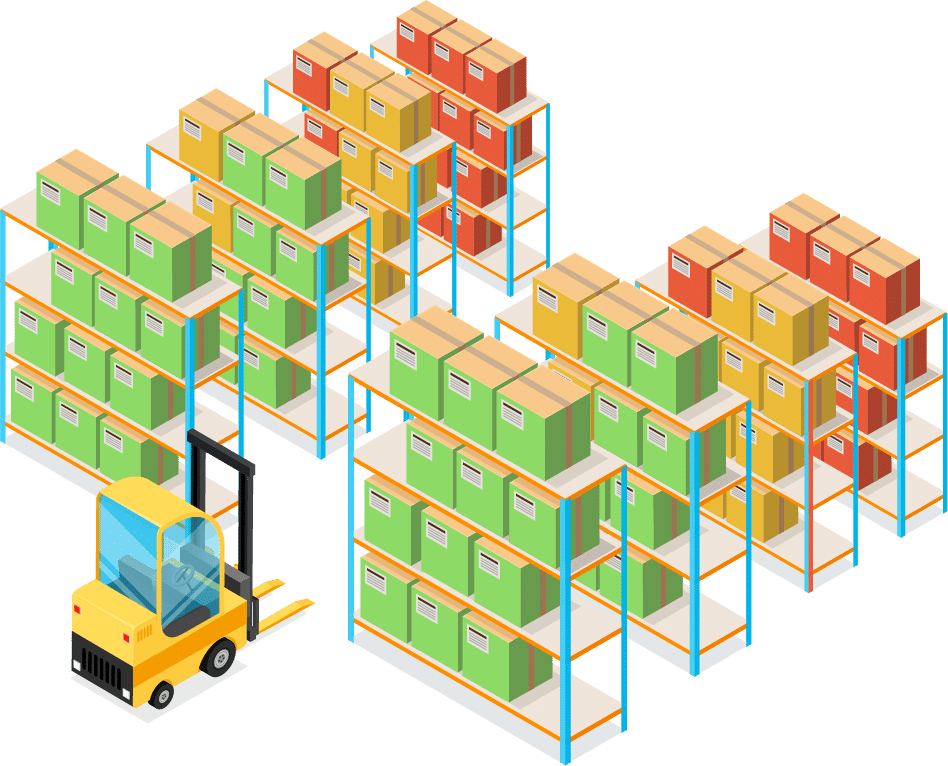
Réduire les déplacements est souvent le premier levier d’optimisation logistique. Plus l’organisation d’entrepôt est pensée en amont, moins les préparateurs perdent de temps à parcourir des allées inutiles. À volume constant, cela permet soit d’absorber davantage de commandes, soit de lisser la charge de travail sans dégrader la qualité.
L’implantation des références doit suivre la réalité des ventes. Une classification ABC, fondée sur la rotation des produits, permet de placer les références les plus demandées dans les zones les plus accessibles. Les produits A, très fréquemment prélevés, doivent être positionnés là où l’accès est le plus rapide.L’objectif n’est pas seulement de ranger, mais de créer un parcours de picking cohérent. Un bon chemin de préparation évite les retours en arrière, les croisements inutiles et les doubles passages dans la même zone. Une organisation du local de stockage bien pensée améliore directement la fluidité du picking.
2- La ramasse globale : une méthode efficace de préparation de commande e-commerce
La ramasse globale consiste à prélever en une seule fois les articles nécessaires à plusieurs commandes. Cette méthode de préparation de commande est particulièrement pertinente dès que l’entrepôt grandit ou que les volumes augmentent, car elle réduit fortement les trajets répétés.
Plus la surface de stockage est importante, plus le gain potentiel est élevé. Au lieu de refaire le même parcours pour chaque commande, l’opérateur réalise une collecte groupée, puis passe à l’étape de tri ou d’emballage selon l’organisation retenue. C’est l’une des méthodes de picking les plus efficaces pour améliorer la cadence.
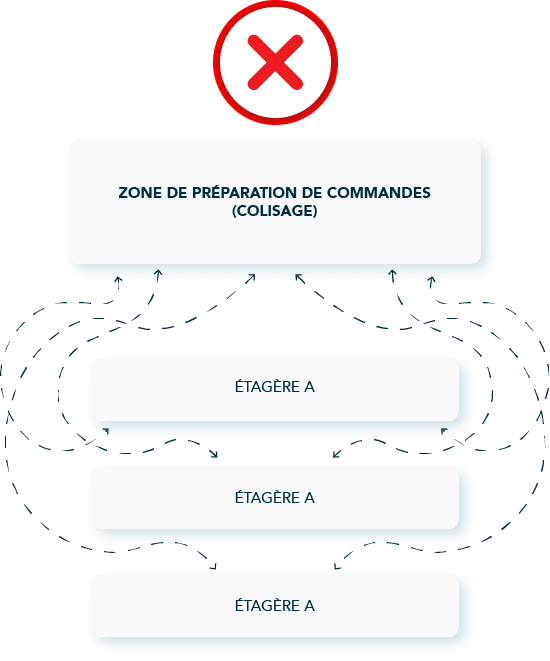
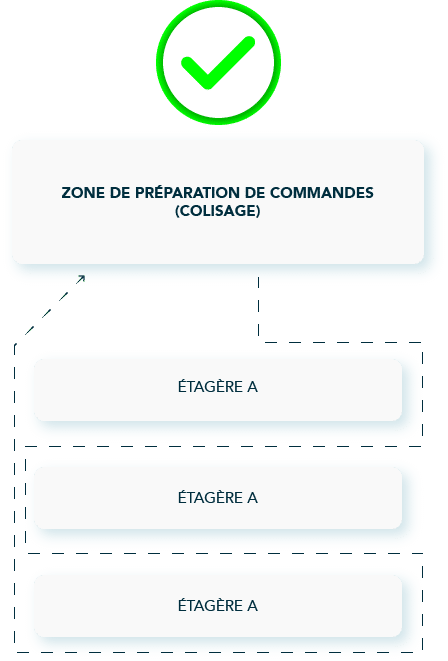
La ramasse globale donne son plein potentiel lorsqu’elle est pilotée par un WMS, ou Warehouse Management System. Le WMS structure les emplacements, ordonne les prélèvements et guide les sessions de préparation. Une solution de logistique interne ou d’optimisation logistique permet de fiabiliser cette organisation à plus grande échelle.
L’usage d’un PDA renforce encore la fiabilité du process. Le scan valide chaque article, limite les erreurs de picking et facilite le suivi des performances par opérateur. On gagne donc à la fois en rapidité, en traçabilité et en qualité de préparation.
La préparation de commandes, vue par ceux qui la vivent au quotidien
Découvrez comment des e-commerçants utilisent Shippingbo pour préparer plus vite, structurer leurs opérations et absorber davantage de commandes sans complexifier leur organisation.
 ▶
▶
Smart Répa
Une préparation plus rapide et plus fluide
Smart Répa illustre l’intérêt du PDA pour guider les préparateurs, fluidifier le picking et sécuriser chaque étape de la préparation.
Lire le témoignage ▶
▶
Univers Décor
Fiabiliser la préparation avec scan et PDA
Univers Décor est passé de 150 à 2000 commandes/jour, avec seulement 4 préparateurs, grâce à Shippingbo.
Lire le témoignage3- Limiter les risques d’avaries pendant la préparation de commande
Une préparation rapide n’a de valeur que si le produit arrive intact chez le client. Les avaries dégradent l’expérience d’achat, augmentent les coûts de retour et mobilisent inutilement le service client.
Le chemin de préparation doit tenir compte de la nature des produits. On ne prépare pas de la même manière un article fragile, un produit dense, un liquide ou une référence sensible. L’ordre de prélèvement compte : les articles lourds et compacts doivent être placés avant les produits fragiles pour éviter l’écrasement.
Le choix de l’emballage fait partie intégrante des étapes de préparation de commande. Le bon carton, la bonne protection intérieure et le bon calage réduisent les chocs pendant la manutention et le transport. Cette étape est souvent sous-estimée alors qu’elle a un impact direct sur la performance logistique globale.
4- Optimiser l’accessibilité des articles dans l’entrepôt

L’accessibilité des références influence directement la productivité et la pénibilité. Un article mal placé ralentit le picking, augmente la fatigue et peut créer des erreurs au moment du prélèvement.
Quelques règles simples produisent des effets immédiats. Les articles lourds ne doivent pas être stockés en hauteur, les références à forte rotation doivent rester faciles d’accès, et les allées doivent permettre les croisements sans congestion. Il faut aussi éviter de lancer trop de préparations dans une même zone au même moment.
Une bonne accessibilité repose sur une lecture fine du stock et des commandes. Il faut croiser la rotation, le poids, les dimensions et la fréquence de co-commandes pour structurer les emplacements. Une gestion des stocks et des commandes plus centralisée, y compris en stock multi-entrepôts, facilite ce pilotage.
5- Gérer les commandes atypiques et les produits volumineux
Toutes les commandes ne doivent pas suivre le même circuit de préparation. Les produits volumineux, les articles dangereux, les références avec numéro de série ou les commandes nécessitant un emballage spécifique doivent être identifiés en amont.
Le plus efficace consiste à taguer ces produits dans la base article. Cela permet de générer des sessions de préparation dédiées et d’appliquer un traitement adapté sans perturber le flux standard. On évite ainsi d’imposer à toutes les commandes des contraintes qui ne concernent qu’une minorité de cas.
Pour les produits très encombrants, la logique de préparation doit parfois être complètement revue. Une palette peut alors devenir l’unité de préparation, avec un emplacement attribué à une seule commande. Cette approche simplifie le tri, sécurise la manipulation et améliore la lisibilité des opérations.
6- Choisir des meubles de rangement adaptés aux caractéristiques des produits

Le mobilier de stockage ne doit jamais être choisi uniquement selon la place disponible. Il doit surtout correspondre à la rotation, au poids, au volume et à la densité des références.
Un rangement adapté accélère le picking et réduit les gestes inutiles. Les racks palettes conviennent au stock de réserve, les meubles dynamiques sont efficaces pour les références à forte rotation, et des étagères plus simples suffisent souvent pour les produits moins sollicités.
Le bon meuble dépend aussi du mode de préparation visé. Une organisation pensée pour la préparation unitaire ne sera pas forcément pertinente pour des vagues de commandes, une ramasse globale ou un process de Put to Pack. C’est pourquoi le choix du mobilier doit toujours être relié aux méthodes de préparation de commande réellement utilisées sur le terrain.
7- Améliorer l’ergonomie des postes pour accélérer la préparation de commande
L’ergonomie des postes est un levier de vitesse autant qu’un levier de fiabilité. Un opérateur gêné par des gestes répétitifs, une mauvaise hauteur de travail ou un matériel inadapté prépare moins vite et se fatigue plus vite.
Améliorer l’ergonomie, c’est supprimer les micro-frictions du quotidien. Cela passe par des chariots adaptés, une meilleure disposition des outils, des surfaces de travail cohérentes et des flux plus fluides entre picking, contrôle et emballage.
Cette optimisation améliore aussi la qualité d’exécution. Moins de fatigue signifie souvent moins d’erreurs, moins d’oubli et une cadence plus régulière. Pour une activité e-commerce en croissance, cet équilibre entre vitesse et confort de travail devient vite stratégique.
3 fonctionnalités à retenir pour optimiser votre préparation de commandes
Pour appliquer ces bonnes pratiques au quotidien, Shippingbo aide les équipes logistiques à structurer le picking, guider les préparateurs et fiabiliser le contrôle avant expédition.
Rucher mobile
Regroupez plusieurs commandes dans un parcours de picking optimisé pour réduire les déplacements et préparer plus de commandes avec la même équipe.
–> DécouvrirGuidage PDA
Guidez les préparateurs étape par étape dans l’entrepôt, validez chaque prélèvement par scan et donnez plus d’autonomie aux équipes sur le terrain.
–> DécouvrirContrôle picking
Vérifiez les produits avant emballage pour limiter les erreurs de préparation, réduire les retours et sécuriser chaque commande avant son expédition.
–> Découvrir8- Le tri par éclatement ou Put to Pack pour les commandes multi-références
Qu’est-ce que le tri par éclatement ?
Le tri par éclatement, aussi appelé Put to Pack, est particulièrement adapté aux commandes multi-références. Le principe consiste à réaliser une ramasse globale, puis à répartir les articles prélevés dans des cases ou bacs associés à chaque commande.
Cette méthode permet de dissocier le prélèvement du tri final. On optimise d’abord le parcours dans l’entrepôt, puis on reconstitue les commandes dans une zone dédiée. C’est une organisation très efficace lorsque plusieurs commandes partagent des produits communs.
Le WMS joue ici un rôle central. Il indique dans quelle case déposer chaque article après scan, ce qui sécurise fortement le process. Le Put to Pack est donc à la fois une méthode de préparation de commande et un levier de réduction des erreurs.
Comment concevoir un meuble d’éclatement ?
Le meuble d’éclatement doit être dimensionné selon la réalité des commandes. La taille moyenne des produits, leur poids, le nombre de commandes préparées en même temps et l’encombrement de la zone de travail doivent guider sa conception.
Le nombre de cases doit correspondre au nombre maximal de commandes traitées par session. Un meuble trop petit crée des blocages ; un meuble surdimensionné complique les déplacements et consomme de l’espace inutilement.
Dans certains contextes, un meuble mobile améliore encore la performance logistique. Le tri peut alors se faire au plus près du prélèvement, ce qui limite les manipulations. Quand les volumes augmentent, cette logique peut être renforcée par un système lumineux de guidage.
9- Pick and Pack et Pick to Light : deux méthodes pour accélérer la préparation

Le Pick and Pack est bien adapté aux environnements où le stock de picking peut être rapproché du poste d’emballage. L’opérateur prélève puis emballe dans le même flux de travail, ce qui réduit les déplacements et fluidifie la préparation.
Le Pick to Light ajoute un guidage visuel au prélèvement. Les emplacements concernés s’allument et indiquent la quantité à prélever. L’opérateur va plus vite, réfléchit moins au parcours et limite les erreurs de sélection.
Ces méthodes ne remplacent pas toutes les autres, elles répondent à des contextes précis. Le bon choix dépend du nombre de références, du volume de commandes, du profil des paniers et de l’organisation d’entrepôt. L’enjeu n’est pas d’adopter la méthode la plus connue, mais celle qui correspond réellement à vos flux.
Comparatif des principales méthodes de préparation de commande e-commerce
Toutes les méthodes de préparation de commande ne répondent pas aux mêmes contraintes. Le bon choix dépend du volume à traiter, de la composition des commandes et du niveau d’outillage de l’entrepôt.
| Niveau de maturité | Organisation observée | Méthode la plus adaptée | Enjeu principal |
| Début d’activité | Préparation manuelle, peu de commandes par jour | Préparation unitaire | Structurer les bases sans complexifier |
| Croissance des volumes | Allers-retours nombreux, premières tensions sur la cadence | Ramasse globale | Réduire les trajets et absorber plus de commandes |
| Commandes multi-références | Besoin de mieux trier et fiabiliser | Put to Pack | Accélérer le tri et limiter les erreurs |
| Entrepôt plus structuré | Flux plus denses, besoin de standardisation | Pick and Pack | Fluidifier la préparation et l’emballage |
| Volumes élevés | Objectif de cadence et de fiabilité renforcé | Pick to Light | Industrialiser la préparation |
Mieux préparer vos commandes, c’est mieux tenir votre promesse client
Optimiser une préparation de commande e-commerce ne consiste pas à appliquer une recette unique. Il faut combiner une bonne organisation d’entrepôt, des méthodes de picking adaptées, des postes efficaces et des outils capables de fiabiliser chaque étape de préparation de commande.
Les entreprises qui progressent le plus sont rarement celles qui changent tout d’un coup. Ce sont celles qui identifient les bons leviers, standardisent leurs process et outillent progressivement les zones où les gains sont les plus concrets : trajets, tri, contrôle, emballage et suivi d’exécution.
Shippingbo aide justement à structurer cette montée en maturité grâce à une suite qui combine OMS, WMS et TMS. L’OMS, ou Order Management System, centralise les commandes, le WMS, ou Warehouse Management System, fiabilise la préparation en entrepôt, et le TMS, ou Transport Management System, simplifie le choix des transporteurs et l’expédition. Avec ses fonctionnalités de préparation, de guidage sur PDA, de ramasse groupée, de contrôle picking et d’impression automatisée des étiquettes, la plateforme permet d’accélérer les opérations tout en réduisant les erreurs.
” Mais avant toute réflexion il est primordial de bien connaître son profil de commande et ses produits. Un diagnostique logistique approfondit de son entrepôt est également indispensable dans une démarche d’optimisation logistique. Ces deux démarches permettent de comprendre les points d’optimisation afin de se diriger vers les solutions les plus adaptées à sa société et à son marché. ”
Florian LAILLET, Directeur Département Supply Chain chez ShippingBo
Découvrez comment mettre en place une stratégie de livraison e-commerce optimale :

FAQ
La préparation de commande e-commerce regroupe les opérations de prélèvement, de contrôle, de tri, d’emballage et d’expédition des produits commandés. Elle commence après validation de la commande et se termine lorsque le colis est prêt à partir.
Elle a un impact direct sur les délais d’envoi, le taux d’erreur, les coûts logistiques et la satisfaction client. Une préparation mal organisée peut ralentir l’expédition, générer des erreurs de picking et augmenter les retours.
Les principales étapes de préparation de commande sont le prélèvement des produits, le contrôle, le tri, l’emballage puis l’expédition. Selon l’organisation choisie, certaines étapes peuvent être regroupées ou automatisées.
Les méthodes les plus utilisées sont la ramasse globale, le Put to Pack, le Pick and Pack et le Pick to Light. Leur efficacité dépend du volume traité, de la typologie des commandes et des outils disponibles dans l’entrepôt.
Pour réduire les erreurs, il faut structurer le picking, sécuriser les scans, standardiser les process et s’appuyer sur des outils adaptés. Une meilleure implantation des références et un contrôle en fin de préparation apportent aussi des gains rapides.
Les PDA, les systèmes de guidage, les solutions WMS et les logiciels de préparation de commande permettent de gagner en rapidité et en fiabilité. Ils aident à piloter les parcours, à valider les prélèvements et à suivre la performance des équipes.
Glossaire
Préparation de commande
Ensemble des opérations nécessaires pour traiter une commande avant son expédition.
Picking
Action de prélever les produits dans l’entrepôt pour préparer une commande.
Ramasse globale
Méthode consistant à prélever en une seule fois les articles communs à plusieurs commandes.
Put to Pack
Méthode de tri qui consiste à répartir les articles prélevés dans les bons colis ou bacs de commande.
Pick and Pack
Méthode dans laquelle le prélèvement et l’emballage sont réalisés dans le même flux de travail.
Pick to Light
Système de préparation assisté par signaux lumineux pour guider les opérateurs.
Ergonomie des postes
Organisation physique du poste de travail pour limiter les gestes inutiles, la fatigue et les erreurs.
Organisation d’entrepôt
Façon dont les zones, emplacements et références sont structurés pour fluidifier la préparation.