

When logistics still relies on team memory, every increase in volume weakens service quality. Training, control, scanning, traceability, standardization: to ensure the reliability of warehouse operations, you first need to check whether they are really controlled. This article will help you spot the signals that show whether your organization is based on a reliable framework, or still too much on habits in the field.
Logistics that depend on a few experienced employees often seem efficient. That is, until the day the volume rises, the peaks follow one another, new arrivals have to be integrated, or the same level of quality simply has to be maintained, albeit with greater complexity.
- When execution still depends on “those in the know
- What this standard makes it possible to evaluate before accelerating
- Before speeding up, make your execution more reliable
This is where the subject changes. It’s no longer just a question of preparing orders, but of making warehouse execution reliable. The problem is whether execution is based on a solid standard, or on memory, habits and reflexes in the field.
This article will help you do just that. Its aim is not to describe an ideal warehouse. Its purpose is to identify whether your organization is really ready to make its operations more reliable, and to increase throughput without compromising quality.
When execution still depends on “those in the know
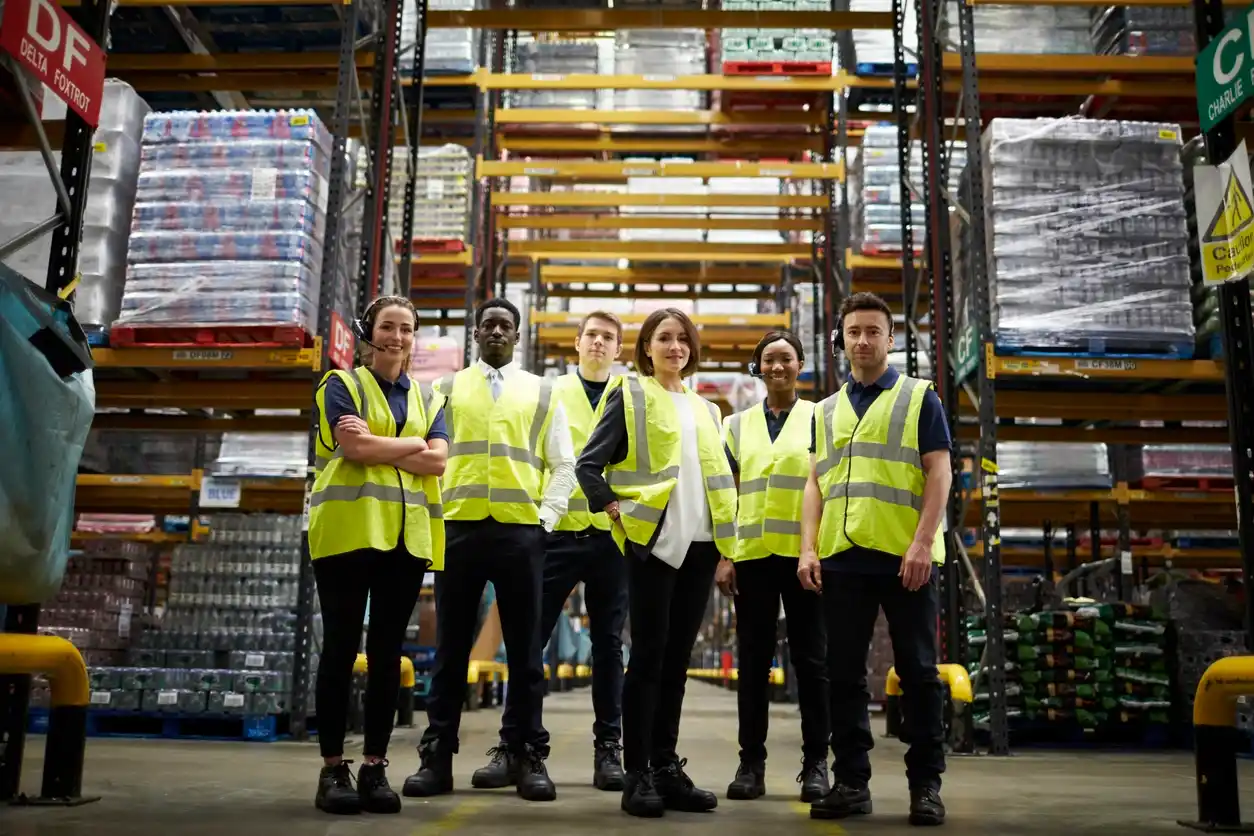
Many teams operate in a way that relies on a few key individuals. They know where inventory is located, how to work around an issue, which locations to avoid, and in what order to prepare items to save time.
In the short term, this can give the impression that business is booming. In the medium term, it’s often a glass ceiling. As soon as you need to absorb a peak, train a back-up, open a new flow or reduce errors, this organization shows its limits.
Team memory is not an operational standard
Reliable execution cannot be based on dispersed knowledge. As long as the intelligence of the flow remains in the heads of the operators, the organization remains vulnerable.
Every departure, every absence, every increase in workload calls service quality into question. Errors increase, training takes time, and management spends more energy securing the existing system than improving performance.
The real issue is the ability to guide action in real time
Scaling up begins when the system takes over repetitive decisions and critical controls. In other words, when the operator no longer needs to constantly interpret what to do, but can follow a clear, reliable and controlled framework.
That’s the whole point of making warehouse operations more reliable: to transform best practices into reproducible rules. The aim is not to make the field rigid. The aim is to make quality less dependent on individuals and more dependent on the process.
What this standard makes it possible to evaluate before accelerating
This reading grid is useful because it forces us to ask the right questions before talking about productivity. Are validations systematic? Are movements really tracked? Can a newcomer become operational quickly, without jeopardizing preparation?
The underlying question is simple: is your execution system-driven, or is it constantly corrected by human experience?
Scanning is not a detail, it’s a reliability rule
In many warehouses, scanning is still seen as an added burden. In reality, it is often what distinguishes an error-tolerant operation from a reliable one.
When location, product, or movement aren’t systematically validated, data quality quickly deteriorates. And when data quality deteriorates, order fulfillment slows down, discrepancies increase, and the customer promise becomes more fragile.
Scaling up also means reducing learning time
A good standard of execution is not just about avoiding errors. It also makes the organization faster to transmit.
If a new operator needs several weeks to become reliable, business will remain difficult to smooth out during tense periods. Conversely, when steps are guided, validated and structured, the ramp-up in skills becomes much faster. This is a direct lever for absorbing growth without multiplying operational fragilities.
Before speeding up, make your execution more reliable
Before you try to ship faster, you need to check whether your execution is really controlled. That’s what this content is all about: helping you to identify whether your organization is already based on a reliable standard, or whether it’s still too dependent on team memory.
This article gives you a first reading grid to assess your level of maturity and see what is still blocking your passage to scale. If you’d like to go further, with a more complete view of the implementation prerequisites, you can download the full guide.
Download the guide and assess the maturity of your logistics execution:

FAQ
A warehouse can be scaled up if its execution does not depend solely on the experience of a few people. It needs standardized processes, reliable controls, clear traceability and the ability to train new operators quickly without degrading quality.
Standardizing execution reduces errors, streamlines preparation and makes operations more reproducible. It is also a lever for absorbing peaks in activity, integrating new flows and maintaining a good level of service with higher volumes.
Yes, in most growing organizations. Scanning enables reliable validation of locations, products and stock movements. Without this validation, discrepancies accumulate, data degrade and preparation becomes more fragile.
The most frequent signs are a heavy reliance on team memory, unsystematic controls, lengthy training for new arrivals, recurring stock discrepancies and constant arbitration in the field to correct what the system is not controlling.
Glossary
Pilot-operated version
logistics organization in which tasks are guided, validated and traced by the system rather than left to interpretation in the field.
Scaling up
an organization’s ability to absorb more volume, more complexity or more channels without losing quality or productivity.
Scan
action of scanning a barcode with a terminal or handheld scanner to confirm a product, location or movement.
Operational standard
set of rules and steps defined to perform a task in a consistent, reliable and reproducible way.
Traceability
ability to track the movements of a product or order throughout its logistical journey.