
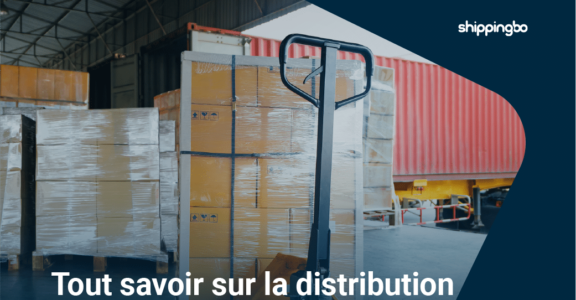
Are you looking to optimize your logistics and satisfy your customers while cutting costs? Direct distribution could well be the ideal solution. Discover our guide to how this strategy can transform your business, from speeding up deliveries to improving competitiveness. Don’t miss out on these essential tips for getting ahead of the market!

In an ever-changing world, where consumers demand fast deliveries and seamless shopping experiences, companies need to rethink their logistics strategies. For e-tailers, finding the right balance between efficiency, speed and cost can be complex. Direct distribution, also known as direct-to-consumer (DTC), offers an innovative solution to these challenges.
This article will guide you through the key concepts of direct distribution, its advantages and limitations, and help you determine the best distribution strategy for your business. By optimizing your logistics processes, you can not only increase your market share, but also build customer loyalty and improve productivity.
Definition: direct distribution
Direct distribution, also known as direct sales, is a marketing method in which a company sells its products directly to the end consumer. This mode of distribution eliminates intermediaries such as wholesalers or logistics service providers, allowing the manufacturer to fully manage the distribution of its products.
In direct distribution, products are transported directly from the factory or production site to the final recipient. This approach can be implemented in a number of ways, including through a salaried internal sales force or through factory outlets, where products are sold directly to the public.
An essential feature of direct distribution is the simplification of the transport plan, which is reduced to a single segment: the product is transported directly from the point of manufacture to the consumer, without passing through intermediate logistics centers. Not only does this reduce delivery times, it also means greater control over the customer experience. In short, direct distribution creates a direct link between manufacturer and consumer, optimizing sales processes and goods delivery procedures for greater efficiency and customer satisfaction.
The advantages of direct logistics distribution
Direct distribution offers a host of advantages for optimizing your logistics processes, resulting in a more efficient and profitable supply chain. Here’s an overview of the key benefits:
- Optimized routes and transport: the reduction in mileage is significant, as products are transported directly from the point of departure to the end consumer. This means fewer complex routes and simplified logistics.
- Reduced transport and delivery costs: the straight-line method inherent in direct distribution delivers substantial savings on transport costs. You no longer need to pay for the handling and costs associated with intermediate logistics platforms.
- Improved customer service: you can respond more quickly and efficiently to your customers’ needs. Closer contact with your customers means you can better understand their expectations, and build customer loyalty through greater responsiveness and improved service quality.
- Greater fluidity and agility in the supply chain: direct distribution helps to avoid problems of overstocking and wastage, by speeding up the flow of products from the warehouse to the customer. This means faster deliveries and optimized inventory management.
- Increased competitiveness: by choosing direct distribution, you gain a competitive edge by being able to respond more quickly to your customers’ needs in terms of quality and lead times. This enables you to stand out in the market and remain competitive with your challengers.
- Improved productivity: direct distribution facilitates a smoother flow of goods, leading to increased orders and sales. This increase in transactions improves your overall performance and productivity.
- Increased profit margins: lower fixed and variable costs, plus the absence of costs linked to intermediate logistics platforms, mean higher profit margins and improved cash flow.
- Greater control and responsiveness: you retain total control over your distribution channel. This control translates into greater responsiveness to market fluctuations and customer feedback. By collecting and analyzing consumption data, you can adjust your pricing and margin strategies more precisely and efficiently.
In short, direct logistics distribution offers you an optimal solution for reducing costs, improving efficiency, and delivering a better experience to your customers. By enabling you to retain total control over your processes, it strengthens your ability to respond rapidly to market needs and maximize your profits.
The limits of direct distribution in logistics
Direct distribution, while beneficial in many ways, also presents certain limitations that companies need to consider carefully. These challenges can influence the decision to implement this strategy, and require a rigorous assessment of internal resources and capabilities.
Massive investment and geographical coverage through direct distribution
To adopt a direct distribution strategy, companies need to invest heavily in their own sales teams and marketing infrastructures. Unlike a partner-based model, where these costs can be shared or reduced, direct distribution requires substantial funding to establish and maintain effective sales networks and advertising campaigns.
What’s more, reaching a large, geographically dispersed audience or various market segments without the help of intermediaries can be particularly complex. Companies need to develop strategies for effectively penetrating different markets without benefiting from the networks established by distributors.
Problems of service and economic efficiency with direct distribution
The distance covered by goods in direct distribution is often longer, increasing the risk of damage or soiling. Unlike distribution via an intermediary platform, there is no final inspection point before delivery to the customer, which can lead to refusal of acceptance in the event of damage.
Furthermore, without sufficient order volumes to final destinations, loads can lack optimization, increasing the number of kilometers traveled and, consequently, transport costs. This results in an inefficient use of resources, in contrast to consolidating shipments via logistics hubs.
Operational organization and infrastructure costs
Operational demands are also higher. For example, drivers may encounter language and geographical knowledge problems when delivering internationally. In addition, the factory of origin must have extensive loading capacity to handle direct shipments, which is not always necessary with intermediate distribution platforms.
Direct distribution often requires the purchase or rental of logistics equipment, such as trucks, and the hiring of personnel, such as drivers. These costs can quickly add up, making direct distribution less economical without sufficient volumes to justify these investments.
Recruitment and training with direct distribution
An effective sales force is crucial to the success of direct distribution. Companies need to invest in recruiting, training and managing this sales force to ensure smooth and efficient distribution, which can be a time-consuming and costly process. In return, the sales force must be recruited, trained and managed to ensure smooth distribution.

How do you choose your distribution strategy?
Choosing the best distribution strategy for your business requires a thorough analysis of various factors. First of all, it’s important to recognize that one distribution channel isn’t necessarily right for all your products. You may need different approaches for different product lines within your company. Here are some key elements to consider when determining the distribution channel best suited to your needs.
Start by examining the product itself. Does it need to be delivered quickly to the customer? Does it need to be combined with other products to make it more attractive? For example, if you sell fresh vegetables from a small farm, direct sales at a local farmers’ market might be your best choice. On the other hand, if you offer a specific piece of computer hardware, it might be more appropriate to work with a value-added reseller or a large specialist retailer.
Think about your sales targets too. If you’re targeting a very specific international demographic, such as video game enthusiasts, direct distribution via the Internet may be more effective. However, if a retailer already has a significant relationship with this community and expertise in this field, an indirect distribution channel might be more advantageous. If you’re looking to reach the widest possible audience, working with large wholesalers and retailers may be the best solution.
When developing your distribution strategy, there are several points to consider. Think about your customers’ needs and how they access your products and services. Are there customers you’re not currently reaching who could be reached via another distribution channel? Imagine the process of buying your product from the customer’s point of view, and base your decisions on solid data and customer relationship management (CRM) tools.
Beware of channel conflicts if you use several distribution channels for the same product. This phenomenon, known as disintermediation, can be avoided by segmenting your market and developing a specific strategy for each customer group. Integrate your channel players into your marketing strategy, too, as channel partners are also important B2B customers.
Finally, to choose the best distribution strategy, take into account your company’s economic, ecological and logistical objectives, the shape of the market, the needs of your customers and the internal resources available. Each product or service has its own specific requirements, and your distribution strategy needs to be adapted accordingly. By understanding your target market, analyzing the competition, and aligning your distribution channels with your marketing mix, you can make informed decisions to optimize your logistics and maximize your market reach.
Diversify your distribution model with Shippingbo
To succeed in the Direct to Consumer sector and maximize your sales, it’s essential to diversify your distribution model. Shippingbo puts its expertise at your disposal to support you in this diversification, helping you develop an omnichannel DTC approach tailored to your logistics needs. Our experts are there to guide you, from the initial audit to the deployment of your B2C strategy, optimizing your logistics processes, inventory management and warehouse organization.
Thanks to Shippingbo’s scalable, robust and comprehensive technology, including OMS, WMS and TMS systems, you can accelerate your time-to-market and develop your omnichannel B2C sales. Our solutions integrate easily with your IT tools via APIs, making your project operational quickly and on budget.
By fully exploiting the potential of your product catalog, you can list your entire offering on the marketplaces of your historical distributors. This enables your partners to test the marketing of new products that they have not yet listed in their stores. With Shippingbo, you can easily manage your distribution network, deciding to which platform to delegate the online sale of your products according to your specific criteria.
Adopt a diversified, high-performance distribution strategy with Shippingbo to stay competitive and manage your inventory.
